
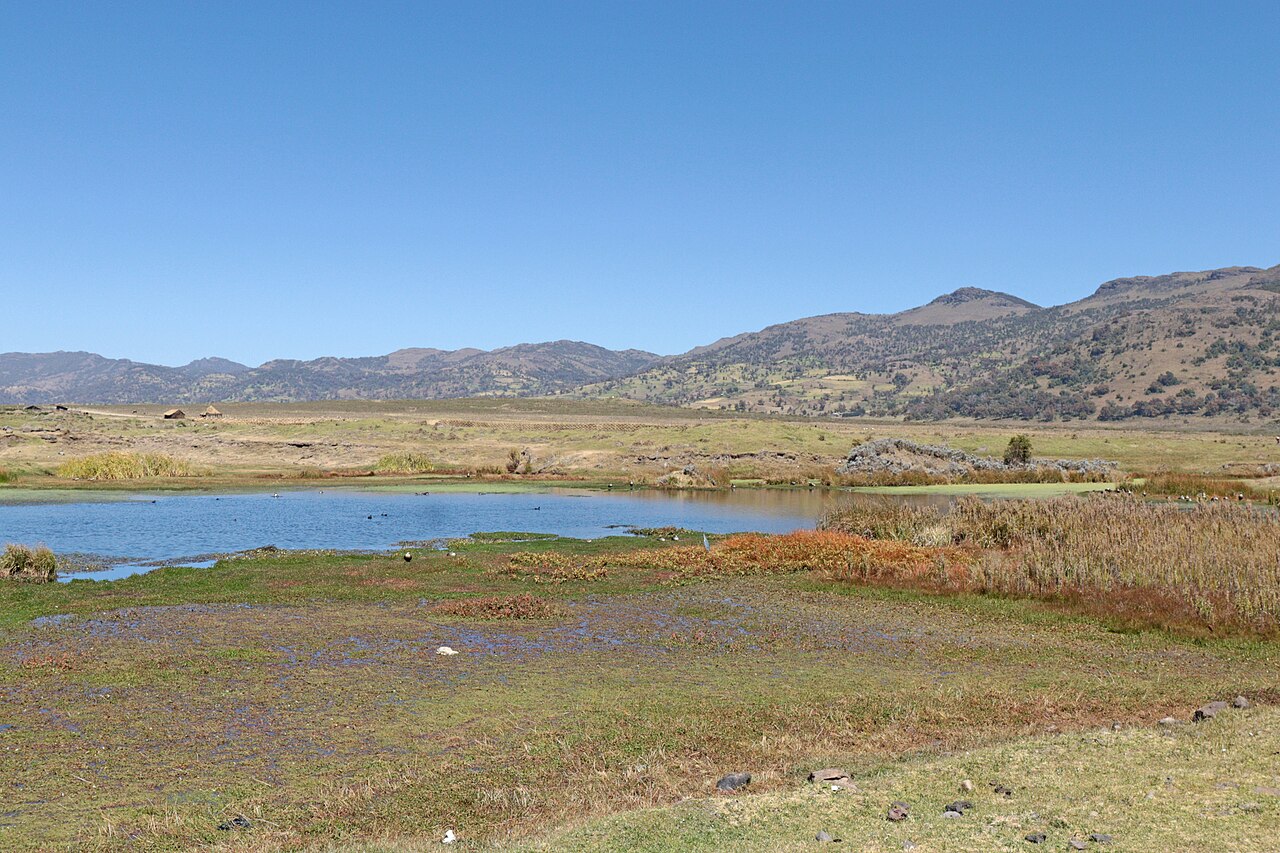
Volcanic Terrain and Water Bodies
The plateau surface is high and rolling, built on volcanic bedrock, with terrain ranging between roughly 3,800 and 4,200 metres above sea level within Bale Mountains National Park, inscribed by UNESCO in 2023. Shallow pools across the plateau are seasonal, while the larger lakes in the eastern portion retain water more persistently. Tullu Dimtu rises to 4,377 metres above sea level as a distinct volcanic summit above the plateau.
Wildlife of the Afroalpine Zone
KBA, NASA, and UNESCO sources document the Ethiopian wolf, giant mole-rats, and giant lobelias as species of the plateau. The Ethiopian wolf preys on giant mole-rats, which occupy the open grassland and heath communities across the surface. Giant lobelias are characteristic plants of this elevation band and are among the defining features of the Afroalpine ecosystem within Bale Mountains National Park.
Lake Sediment Record and Human Presence
A 2026 study of sediment cores from two lakes on the Sanetti Plateau dates the onset of sediment accumulation to approximately 18,200 and 17,000 years ago. The same research documents hunter-gatherer presence in the wider Bale highlands by around 15,000 years ago, establishing a broad environmental and human chronology for the region.