
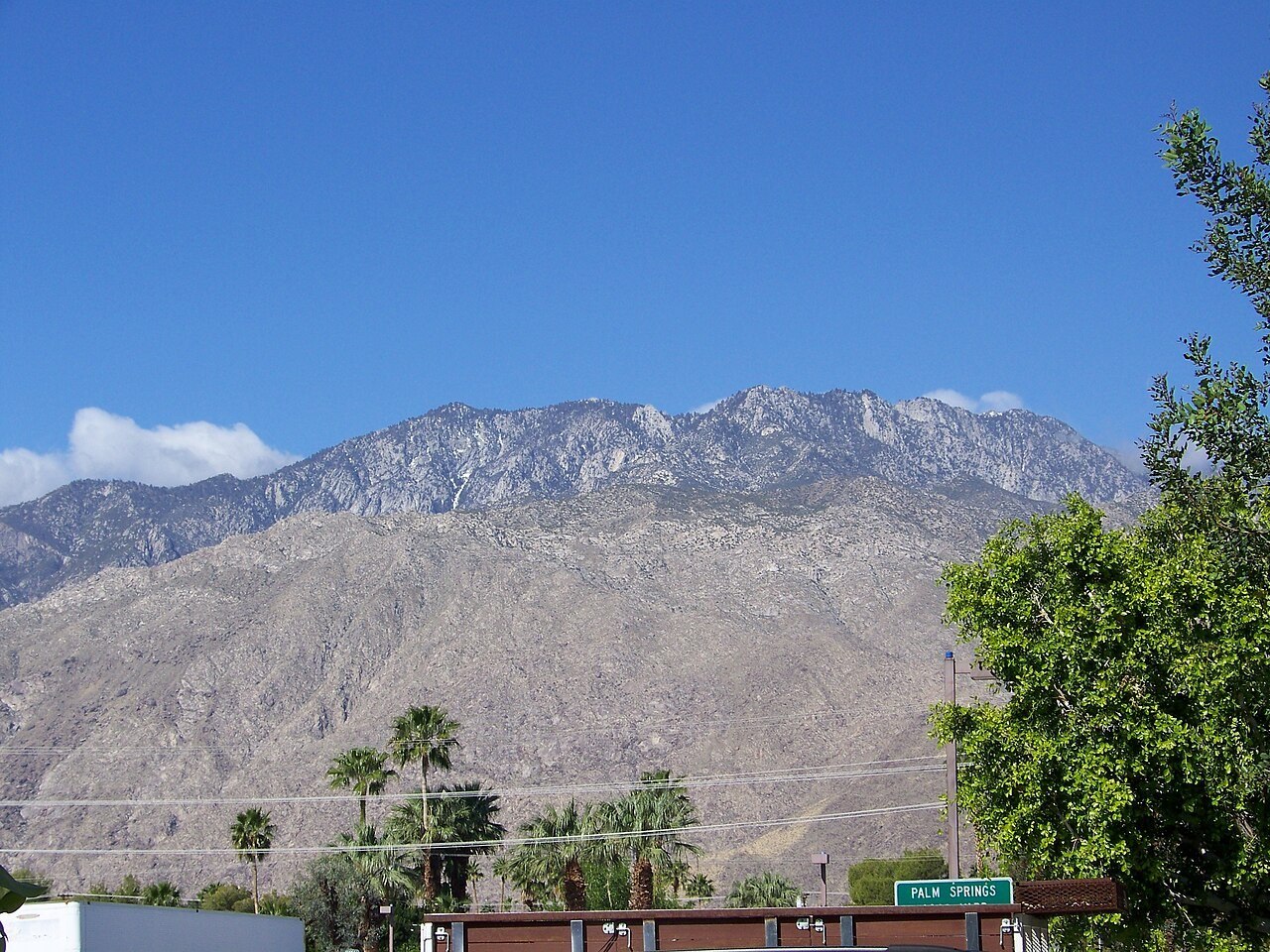
Granite and Elevation
San Jacinto's summit is composed of granite, and its elevation supports subalpine forest and meadow zones that contrast sharply with the desert visible toward Palm Springs. The San Jacinto Mountains block is a fault-bounded uplift whose topographic relief ranks among the most dramatic in the contiguous United States.
Built by the Civilian Conservation Corps
The Civilian Conservation Corps established a camp on San Jacinto in May 1934. By October 1935 work had produced a masonry summit shelter, a stone structure built at one of the peak's most exposed sites. Mount San Jacinto State Park opened to the public in 1937, formalizing access to the terrain the Corps had developed.
The Aerial Tramway and Its Vegetation Crossing
The Palm Springs Aerial Tramway was authorized in 1945 and completed in 1963. Its mountain station sits below the summit, requiring continued ascent to reach the peak. The tramway crosses from desert scrub through mixed conifer forest, compressing into a single ride the ecological transition that elevation produces across the San Jacinto landscape.