
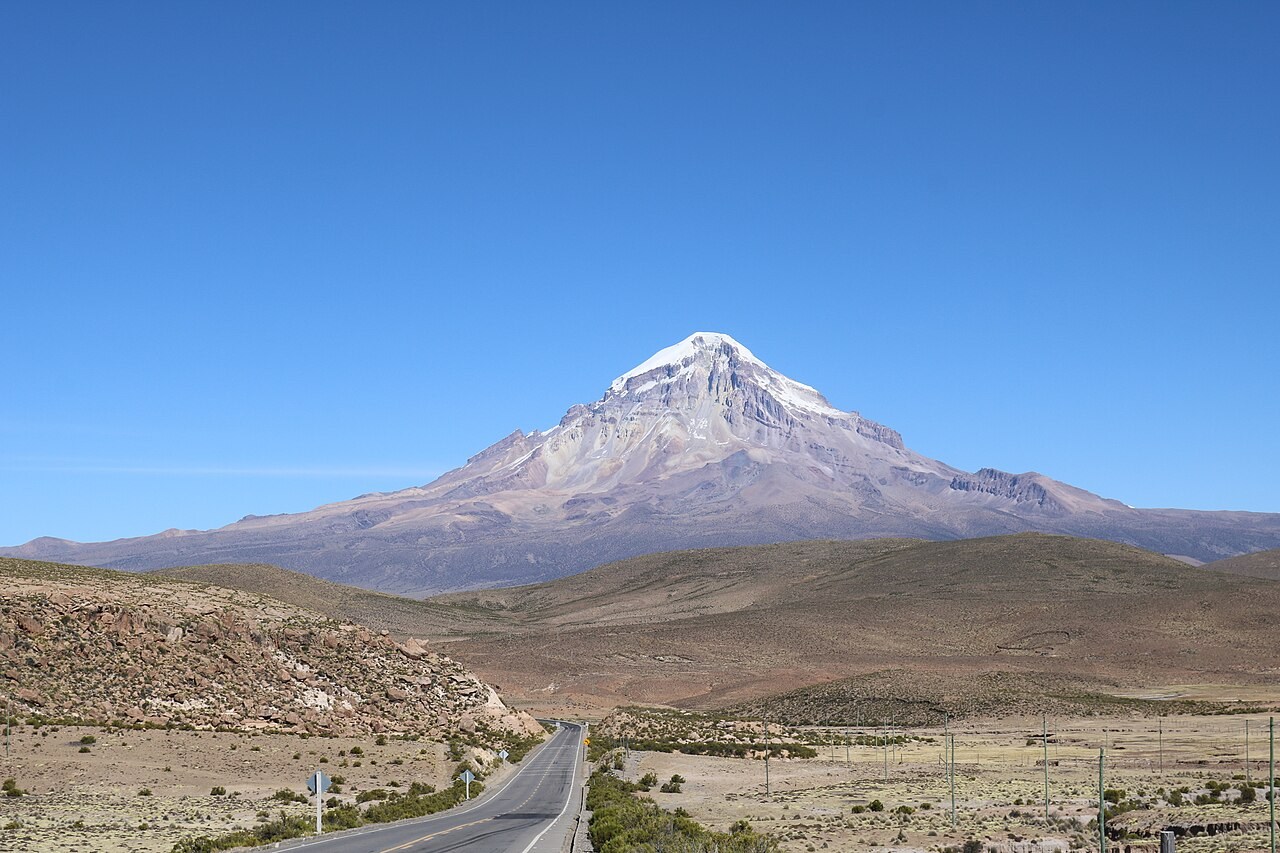
Geological structure and volcanic origin
According to the Smithsonian Institution's Global Volcanism Program, Sajama is an andesitic stratovolcano resting on a group of earlier volcanic domes. This layering of structures reflects a complex geological history: the current edifice did not arise from a single eruptive episode but from the progressive accumulation of material over a pre-existing volcanic substrate. The chronological assignment of the volcano has generated discrepancies among different sources; the GVP currently catalogues it as Pleistocene in age, while noting that divergent criteria exist in the specialist literature.
The GVP records no eruptions of Sajama in recorded history. Any claim about a most recent eruption on a specific date or about present volcanic activity would go beyond what the available data can support. What the scientific record does establish is that the volcanic edifice accumulates a relief of approximately 2,200 metres above its base, a magnitude that underscores Sajama's imposing presence above the altiplano plain surrounding it.
The glaciers and the altitudinal contrast of the landscape
The summit and upper flanks of Sajama are covered by glaciers that, seen from the altiplano, give the mountain a visually dominant presence. This ice mantle constitutes Bolivia's highest point and forms part of an Andean cryospheric system that Sajama National Park situates within a landscape of remarkable altitudinal diversity. The glaciers crowning the volcanic edifice contrast sharply with the middle and lower slopes, where queñua forests — trees of the genus Polylepis — grow, their presence at these elevations being characteristic of high-altitude Andean ecosystems.
The coexistence of queñua forests and glaciers is one of the most distinctive features of the Sajama area within the Bolivian altiplano. Bolivia's development ministry links the mountain to Sajama National Park, a conservation unit that protects both the forested slopes and the high glaciated zone. It is important to note that these queñua forests are found on the intermediate slopes of the volcano and not in the ice-covered high-mountain zones: the vertical distribution of each formation corresponds to clearly differentiated altitudinal ranges.
Sajama in the context of the Oruro altiplano
Sajama's position on the Oruro altiplano, near the border with Chile, makes it a first-order geographical landmark in western Bolivia. Its mass, visible from great distances across the plain, articulates the altiplano landscape with the western cordillera of the Andes. Sajama National Park, which surrounds the mountain, integrates the volcanic summit with the puna ecosystems and the queñua forests within a single conservation territory, reflecting the scale of the natural processes that define this sector of the Bolivian Andes.