
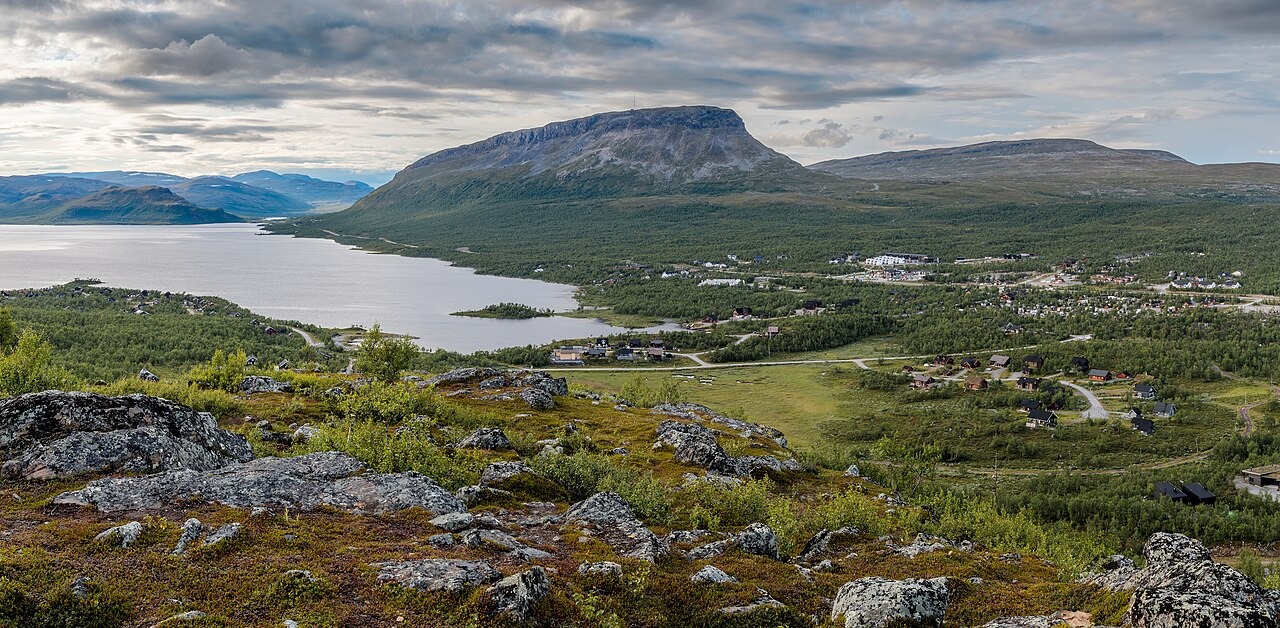
Geology and the rock record
The University of Helsinki's Kilpisjärvi Biological Station describes a contact on Saana between much older Finnish basement rock and younger formations linked to the building of the Scandinavian mountains. Regional dolomite in the younger sequence influences local soil chemistry and contributes to plant communities that differ from those on the surrounding terrain. Trace fossils preserved on the slopes record animal activity from approximately 540 million years ago — a date placing them near the Cambrian boundary. These are tracks and burrows, evidence of behavior in ancient sediment, not fossilized body remains. A 2013 discovery, documented through a University of Helsinki and Bioart Society collaboration, made unusually well-preserved examples of these traces available to researchers.
Wartime layer
The north side of Saana holds physical evidence of the Second World War in the form of fortifications identified along the Saanajärvi Science Trail, administered by the University of Helsinki. This built layer coexists with the geological and ecological record on the same slopes, and the science trail treats it as a distinct category of site within the landscape.
Sámi cultural landscape
Metsähallitus designates the fells around Saana as part of the Sámi cultural landscape in the management documentation for the Kilpisjärvi and Malla protected areas. The Northern Sámi name Sána belongs to a specific linguistic and cultural tradition within the broader Sámi world; the region's pastoral and place-name heritage is not interchangeable with that of other Sámi groups or areas.