
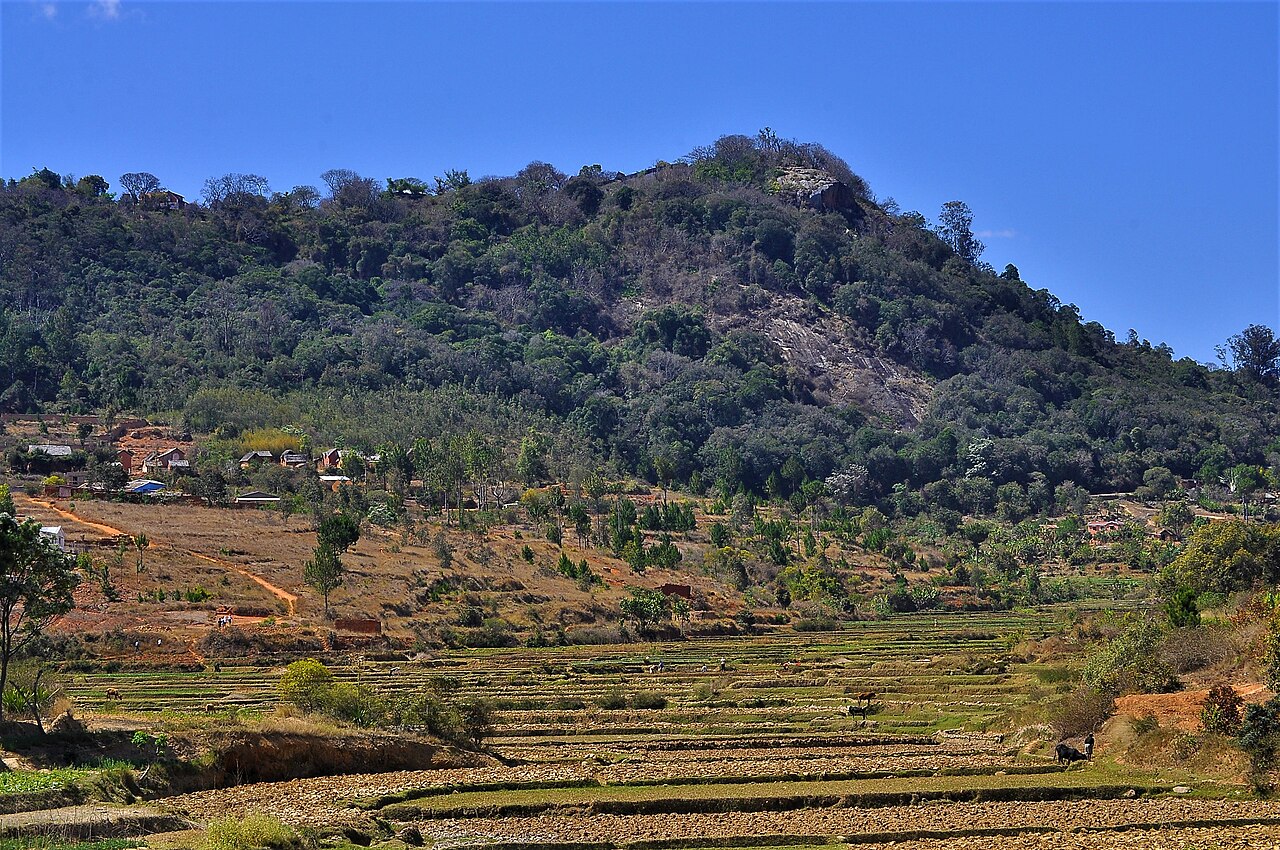
Fortified Enclosures and Fourteen Stone Gateways
The wider ensemble is defined by defensive ditches and fourteen stone gateways, elements that the ICOMOS evaluation identifies as integral to the site's character. These structures mark the boundaries of a settlement organised around royal authority, with each gateway contributing to a layered system of enclosure that shaped movement through the complex across several centuries of Merina rule.
Royal Buildings and Burial Associations
Within the enclosure stand royal buildings whose construction and modification spanned the sixteenth to the nineteenth centuries. The nomination documentation records burial associations alongside these structures, reflecting the close relationship between dynastic governance and ancestral commemoration that characterised Merina royal practice. The buildings represent successive periods of elaboration rather than a single founding moment.
Sacred Springs, Lake, and Living Woodland
Sacred springs and a lake are constituent parts of the inscribed ensemble, as recorded in the 2001 nomination. The surrounding woodland is treated as an active element of the landscape rather than a passive backdrop, and the site's Outstanding Universal Value recognised by UNESCO encompasses both the physical fabric and the living traditions that communities continue to associate with Ambohimanga's waters and groves.