
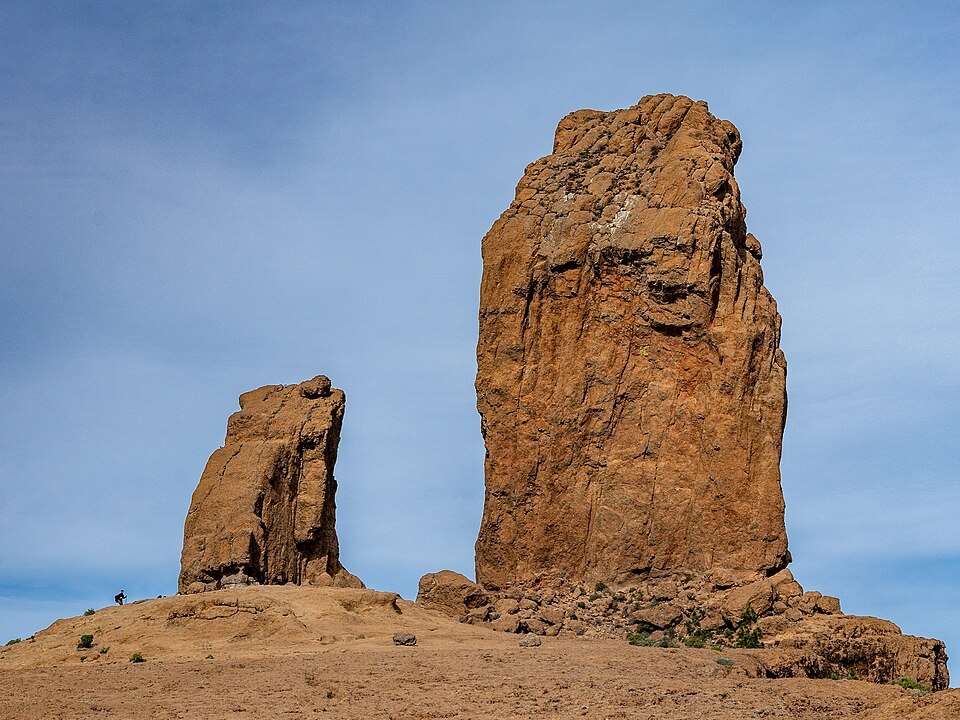
Geology: a volcanic monolith
Roque Nublo is the result of volcanic processes that shaped the interior of Gran Canaria over millions of years. The monolith rises approximately 80 metres above its rock base, reaching an elevation of 1,813 metres above sea level. Its vertical profile and commanding position in the central landscape of the island make it visible from very distant points, contributing to its status as a geographical and visual landmark. Administratively it belongs to the municipality of Tejeda.
A site of aboriginal worship and island symbol
In antiquity, Roque Nublo was used as a place of worship by the aboriginal inhabitants of Gran Canaria. This ritual function, combined with its natural monumentality, explains why the formation has been recognised through the centuries as one of the most representative emblems of the island. Since 2019 the roque has been included within the Cultural Landscape of Risco Caído and the Sacred Mountains of Gran Canaria, a designation encompassing a broader territory of marked heritage and historical value.
Legal protection: from Natural Space to Monument
The history of protection for Roque Nublo has several documented stages. In 1987 it was declared a Natural Space. In 1994, the Canarian Natural Spaces Act elevated it to the category of natural monument, incorporating it within the Nublo Rural Park. This legal framework recognises both the landscape value of the monolith and that of its surrounding environment, preserving one of the most singular volcanic formations in the archipelago.