
Karst Landforms and Hydrology
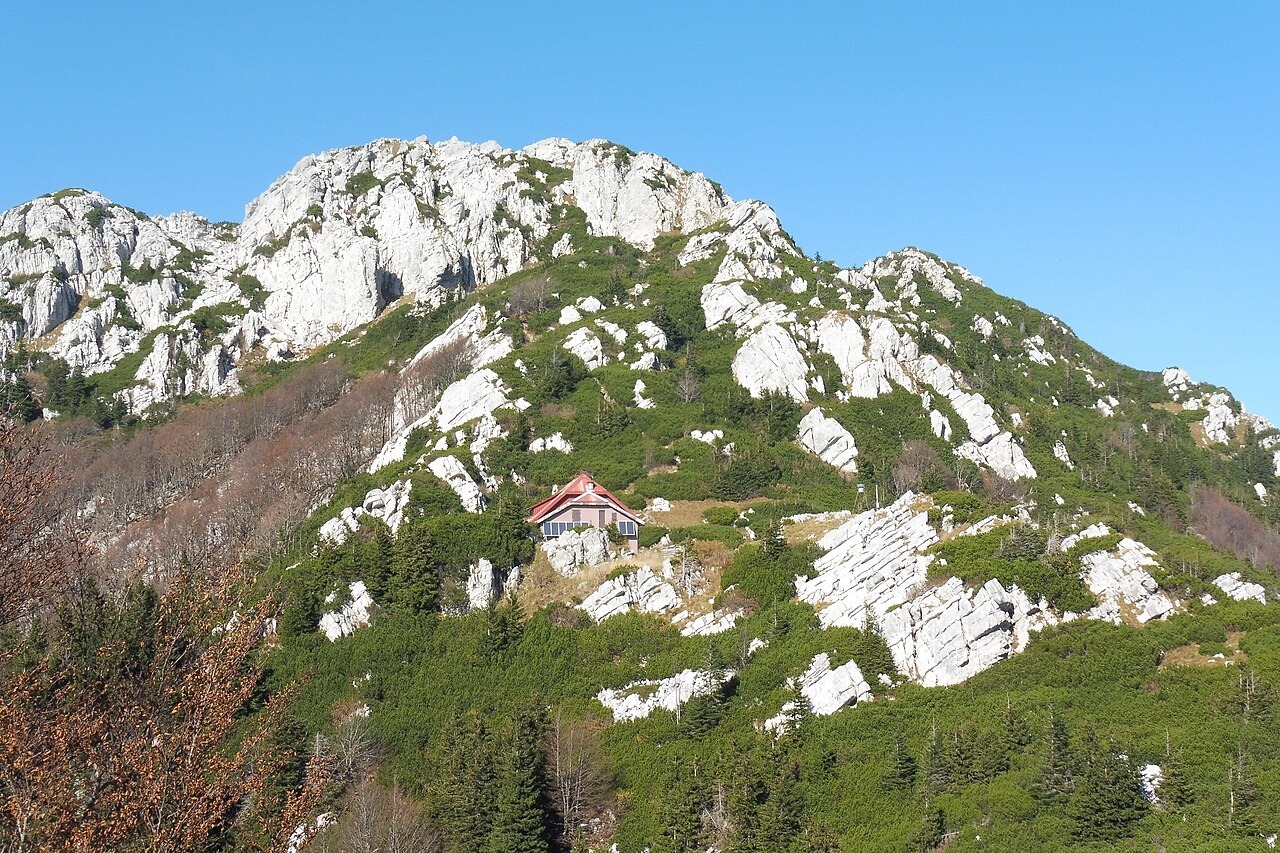
The massif is built largely from Mesozoic limestone and dolomite, the same rock types that underpin the broader Dinaric karst. The Croatian Mountaineering Association places the summit coordinates directly on Veliki Risnjak, well west of an older mapped position. This karst geology shapes a counterintuitive hydrology: the ridge receives abundant precipitation yet produces few surface springs, because water drains rapidly through fissured rock rather than collecting in streams. The Leska, one of the few named watercourses in the area, disappears into a sink rather than flowing to an outlet. The source of the Kupa River lies on the north side of the broader protected landscape, within the zone added during the park's 1997 expansion.
Park History and Scientific Advocacy
Risnjak was established as a national park in 1953, following scientific advocacy that included the botanist Ivo Horvat. The original protected area covered the core massif. In 1997 the park was expanded to incorporate Snježnik and the Kupa source area, significantly enlarging its ecological and hydrological scope.
Name and Wildlife
The Croatian word ris means lynx, and according to the Parks of Croatia institution the park's name is associated with that animal. The Eurasian lynx (Lynx lynx) is among the species linked to the park's ecosystem. Schlosser's lodge sits below the summit of Veliki Risnjak and serves as a reference point in Croatian Mountaineering Association documentation of the peak.