
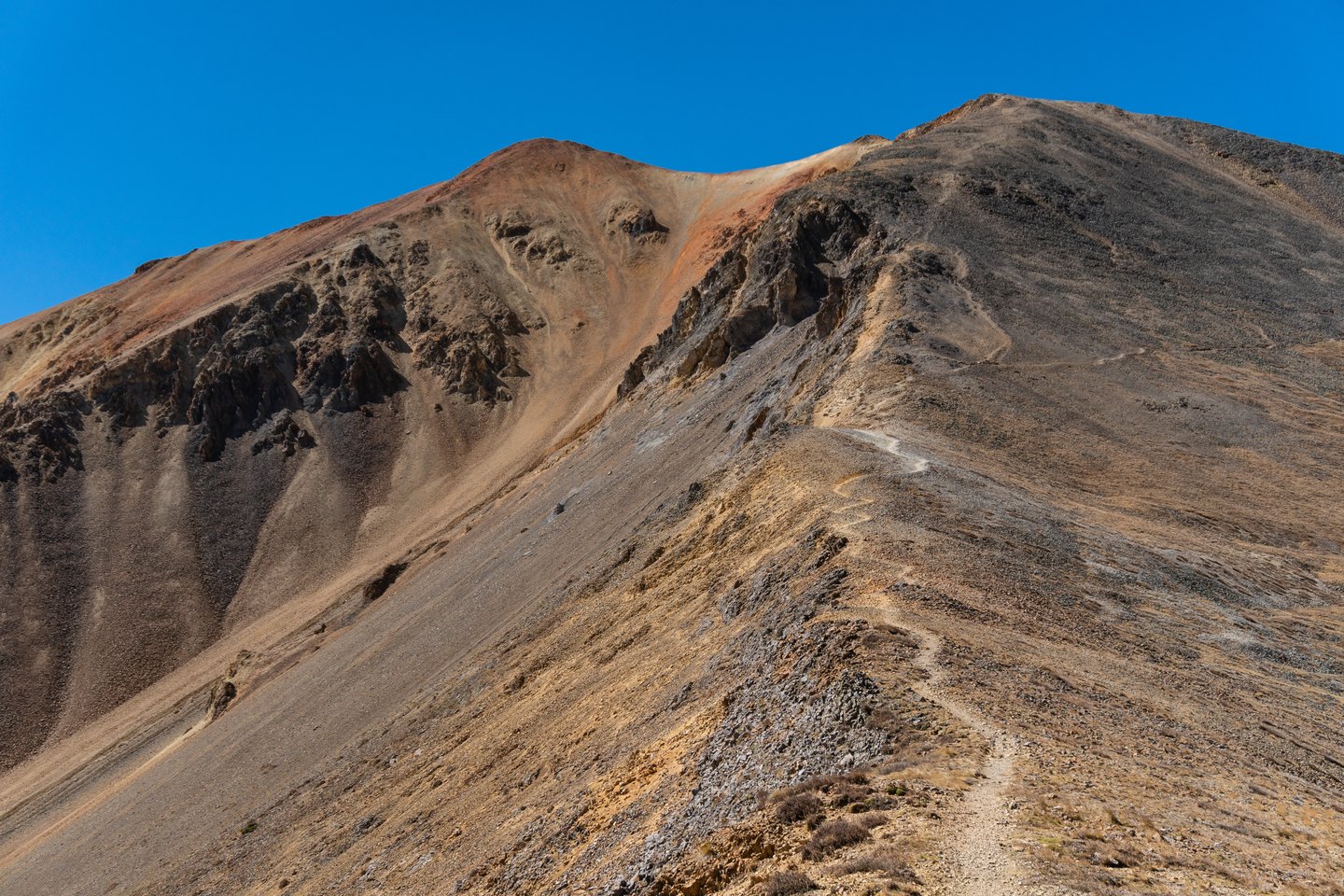
Caldera Origins and Volcanic Rock
The U.S. Geological Survey places Redcloud Peak within the mapped extent of the Lake City caldera, a large structural depression formed by ancient volcanic collapse. USGS mapping identifies a thick sequence of densely welded Sunshine Peak Tuff and associated collapse breccia in the area, rock units deposited approximately 22 to 23 million years ago. The formation named Sunshine Peak Tuff is a geologic unit distinct from the neighboring summit of that name, and the presence of these volcanic rocks does not indicate current volcanic activity.
Headwaters and Sulfide Bedrock
In July 1994 the USGS sampled 19 headwater streams in the area to study water chemistry where bedrock contains sulfide minerals. The study found that natural oxidation of pyrite can acidify some headwaters in portions of the study area. This work documented a geochemical condition present in parts of the landscape as a scientific survey of natural processes.
Wilderness Study Area Character
The Red Cloud Peak Wilderness Study Area covers the terrain in which Redcloud Peak sits, a landscape that includes forest at lower elevations giving way to tundra and visibly banded, multicolored strata on the upper mountain. Glacial cirques documented in the area reflect a history of ice erosion that helped shape the relief of this corner of the San Juan Mountains.