
Geology of a Carved Plateau
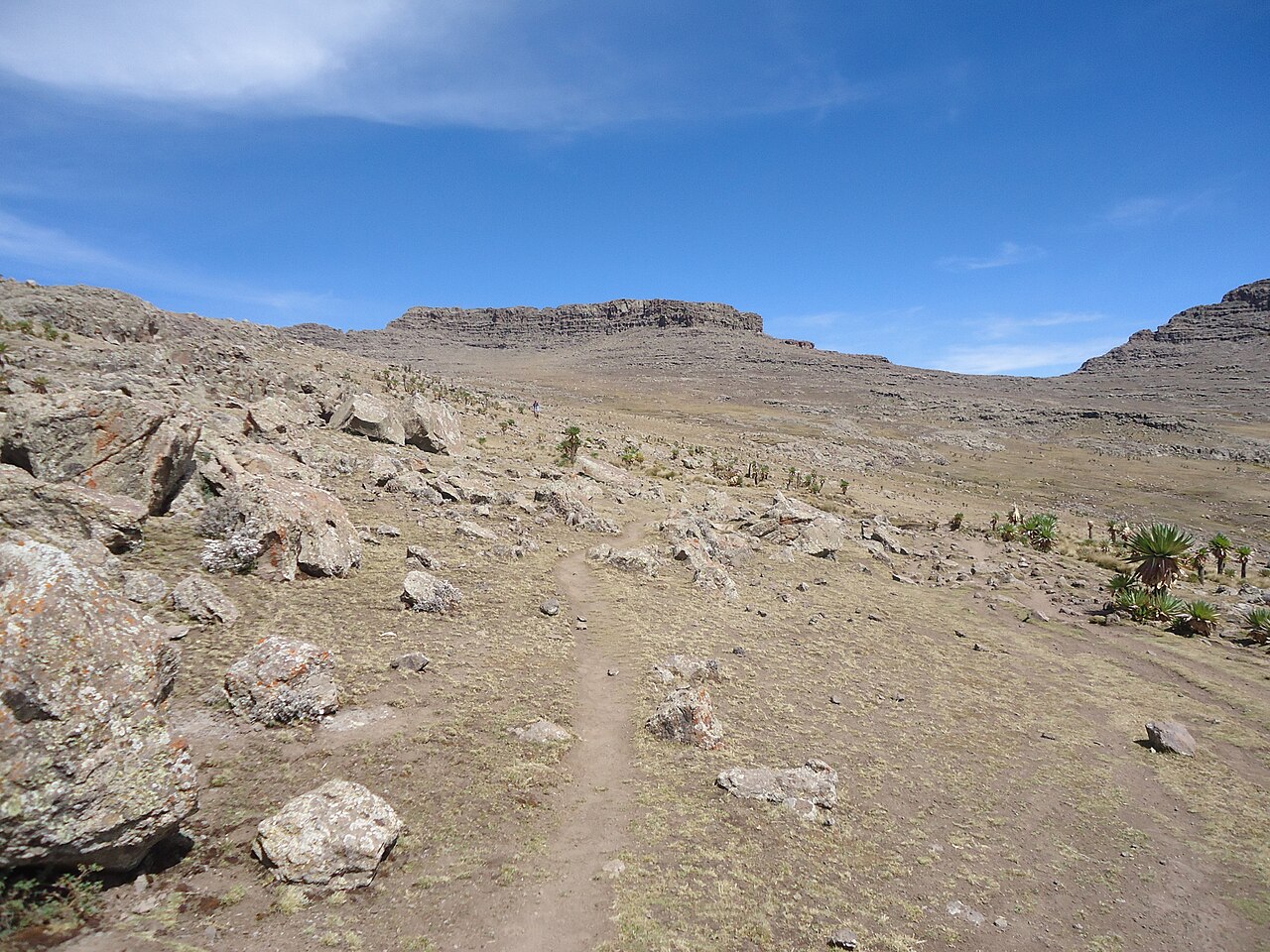
The bedrock of the Simien massif is ancient basalt, and millions of years of erosive incision have shaped the elevated plateau into steep-walled gorges and exposed cliff faces. Rivers and weathering worked progressively into the highland, leaving behind the broken terrain that defines the range. Ras Dejen at 4,543 metres represents the high remnant of this process, a summit defined as much by the depth of the gorges around it as by its own elevation.
The cliff faces produced by this long erosion are structurally linked to the habitat of the Walia ibex, an animal endemic to the Simien Mountains. The steep, dissected terrain provides the broken ground the ibex depends upon, making the geology and ecology of the massif inseparable in any account of the range.
Simien National Park and World Heritage Inscription
Simien National Park was inscribed as a UNESCO World Heritage Site in 1978, a recognition tied to the landscape's exceptional landforms and to its concentration of endemic and globally significant fauna. The park shelters Ethiopian wolves and geladas alongside the Walia ibex, with upper moorland zones characterised by giant lobelias. These species are distributed across the massif rather than concentrated at the summit.
The inscription reflects the interaction of geology, elevation, climate, and biology across a range far larger than its highest peak alone. Ras Dejen gives the massif its greatest altitude, but the eroded plateau landscape, the endemic fauna tied to its cliffs, and the highland flora of its upper reaches together warranted World Heritage recognition.
The Two Names and the Recorded Elevation
The mountain carries two names in common use. Ras Dejen is the form found in Ethiopian sources and in the UNESCO documentation for the World Heritage site. Ras Dashen appears frequently in international mountaineering literature and reference works. Both names refer to the same summit. The elevation of 4,543 metres is the figure given by Visit Ethiopia and is the reference value used here.