
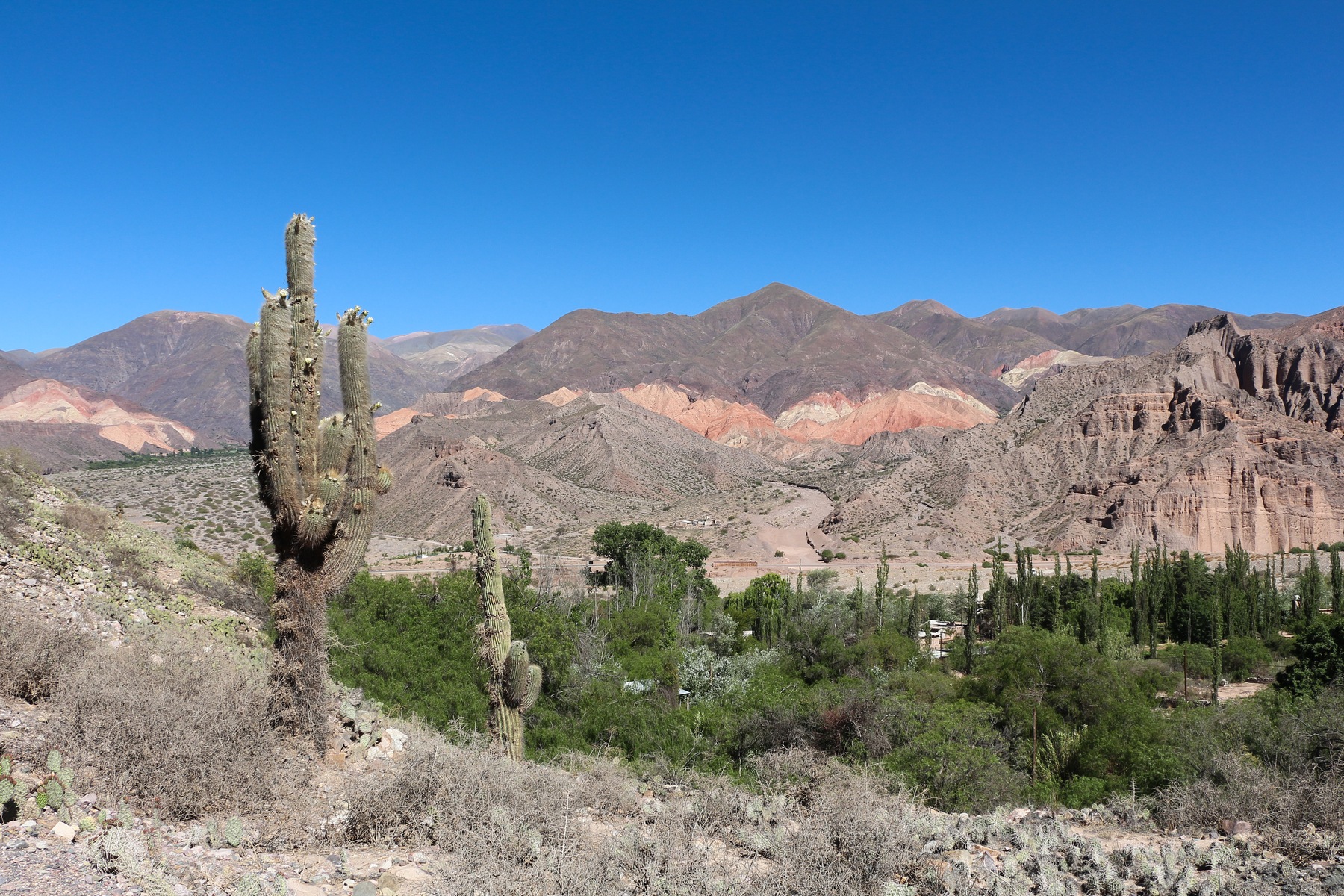
Geology of the corridor
In the north-central part of the valley, between Coctaca and Huacalera, studies by SEGEMAR and CONICET describe sedimentary deposits of the Uquía Formation, dated to the Pliocene–Pleistocene. Among its layers are conglomerates—rounded fragments consolidated into rock—that record distinct episodes of transport and accumulation within that stratigraphic unit.
Human occupation and pre-Hispanic agriculture
According to UNESCO, the corridor preserves traces of human occupation spanning some 10,000 years, from hunter-gatherer groups to agricultural settlements and the road network of the Inca period.
At the site of Coctaca, east of the present-day town of Humahuaca, CONICET research identifies agricultural constructions on hillside slopes, with planting enclosures bounded by walls and terraces in certain sectors. Analysis of their chronology and variations distinguishes several phases of construction. Part of the works were carried out during Inca rule. At the confluence of the Guasamayo and the Río Grande, the elevated settlement of Tilcara records occupation phases from the thirteenth century and Inca-era remodelling, according to the Comisión Nacional de Monumentos.
The quebrada in the independence wars
On 1 March 1817, militias commanded by Manuel Eduardo Arias attacked the royalist garrison at Humahuaca and secured a victory. The Province of Jujuy notes that the action severed communications with Alto Perú.
In the city of Humahuaca, on Cerro Santa Bárbara, stands the Monument to the Heroes of Independence, a work by sculptor Ernesto Soto Avendaño inaugurated in 1950. UNESCO inscribed the Quebrada de Humahuaca as a cultural landscape in 2003.