
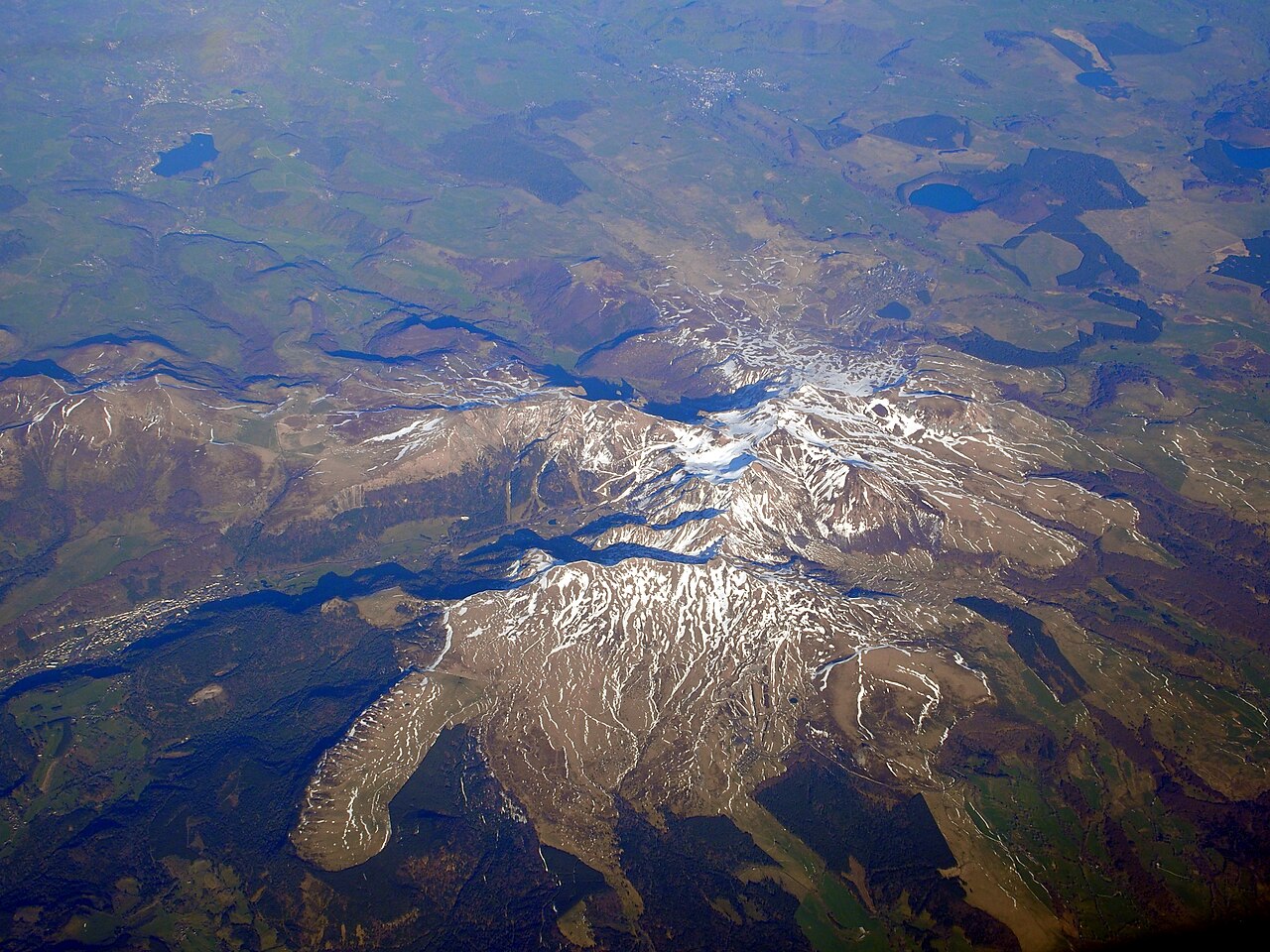
A two-phase volcanic architecture
The Monts Dore are the product of two interlocking stratovolcanoes, of which the Sancy forms the more recent structure. Granite makes up the basement of the whole massif, upon which volcanic material accumulated over successive eruptions. The current appearance of the summit, likened to a neck — a column of solidified lava exposed by erosion — bears witness to the long degradation that followed the period of volcanic activity.
The park attributes the characteristic forms of the massif, its deeply incised valleys and escarpments, to a combination of rockfalls and glacial erosion. Former elevations cited for the massif are presented only as estimates, not as established values.
The Chaudefour Valley: imprint of the ice
On the eastern flank of the Sancy, the Chaudefour Valley illustrates the work of Quaternary glaciers with rare clarity. Its steep walls and flat floor result directly from the glacial erosion documented by the park. It is in this enclosed yet exposed environment that the Auvergne sheepsbit thrives, a plant described by the park as very localised, whose presence is the subject of specific monitoring.
The Chastreix-Sancy reserve and the Fontaine Salée cirque
To the south of the massif, the Chastreix-Sancy nature reserve, created in 2007, encompasses the glacial cirque of Fontaine Salée. This protected area covers varied and distinct environments: peat bogs, summer pastures, and formations shaped by glacial action. The reserve illustrates the ecological richness that accompanies the volcanic relief of the Monts Dore, without these different ecosystems being conflated with one another.