
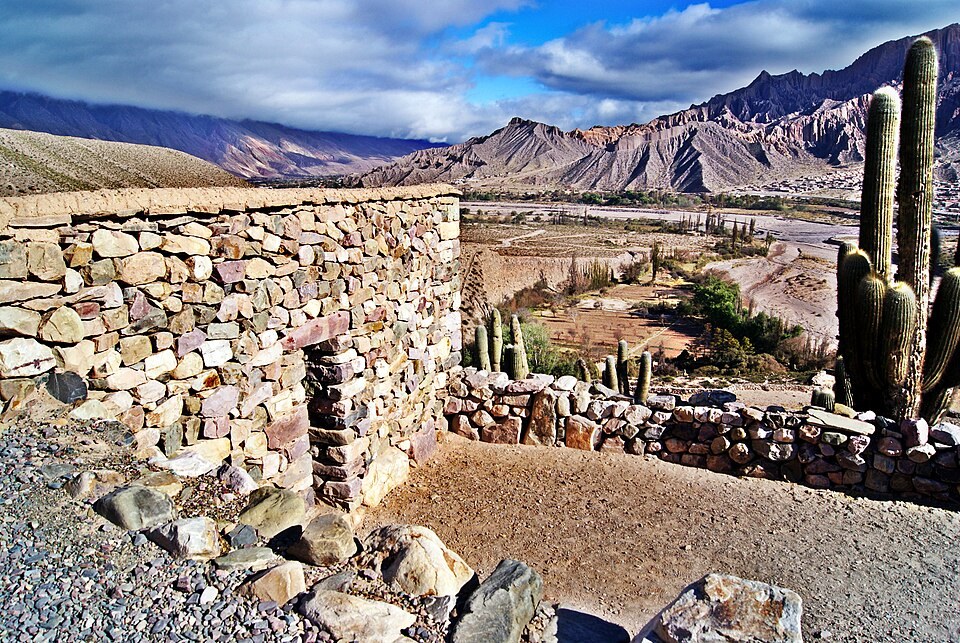
Layout of the settlement
The stone constructions follow the natural relief of the hill and articulate sectors whose functions changed over time. The complex integrates domestic spaces, workshops and ceremonial areas, and successive periods of occupation transformed the organisation of space across the centuries.
The first excavations
Juan Bautista Ambrosetti and Salvador Debenedetti launched the first archaeological campaigns at the Pucará in 1908, opening the systematic study of a site that holds evidence of several centuries of Andean occupation.
Twentieth-century reconstructions and heritage
Some of the structures visible today were subject to reconstruction work during twentieth-century campaigns. The pyramid-shaped monument present on the site is a commemorative work honouring the researchers of the Pucará and does not constitute a pre-Hispanic construction.