
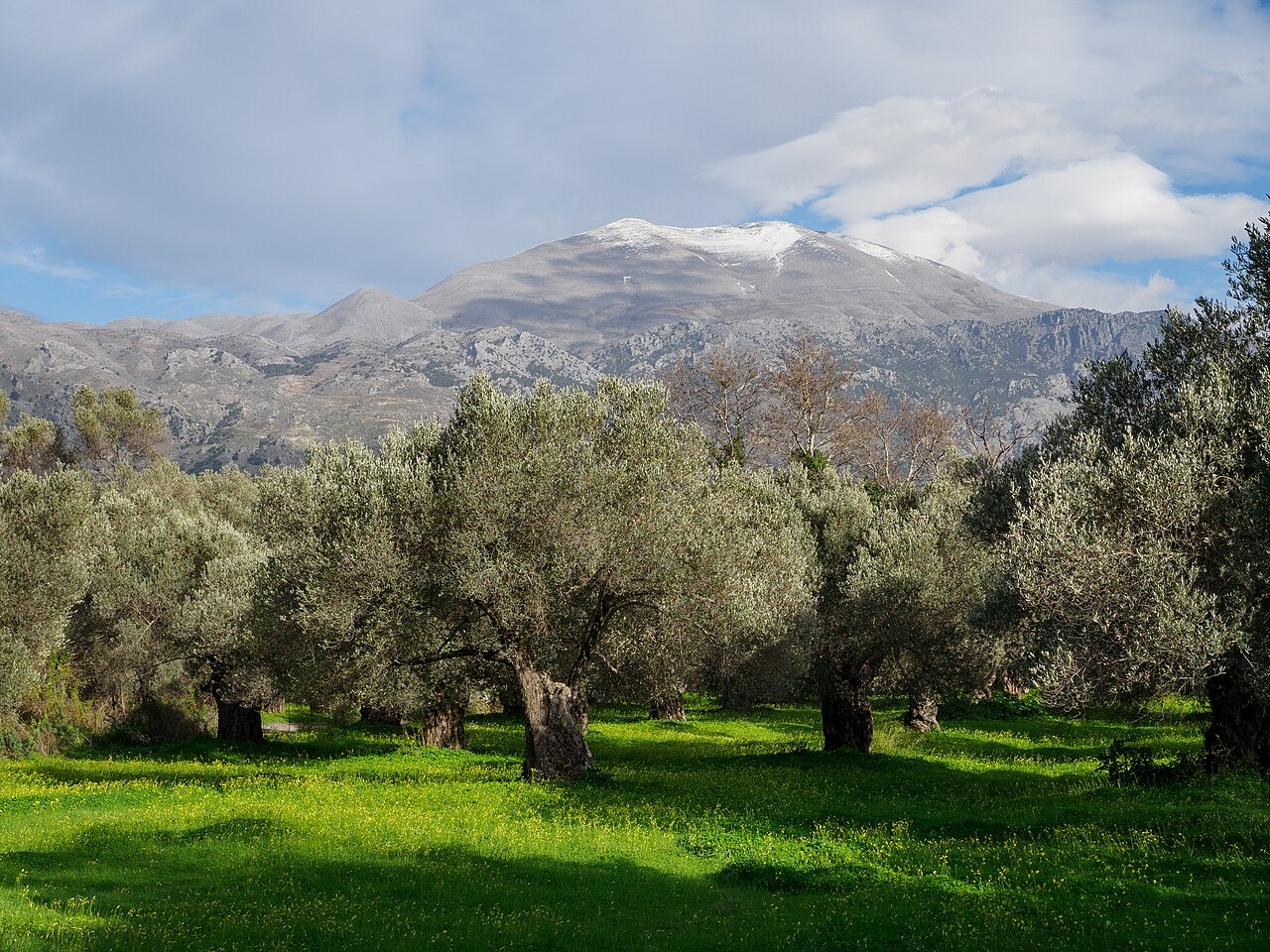
Karst Terrain and Rock Structure
The massif is built from carbonate rocks deformed into stacked nappes, older sheets of rock displaced over one another during mountain building. Dissolution of these fractured limestones formed the karst terrain the Psiloritis UNESCO Global Geopark documents across the range, including closed depressions on the Nida Plateau and the Idaean Cave, which opens along a fault at the plateau rim.
The Idaean Cave and Its Excavations
Local mythology holds that the goddess Rhea concealed the infant Zeus in the Idaean Cave. The Greek Ministry of Culture records two excavation campaigns at the site: Federico Halbherr worked there in 1885, and Yiannis Sakellarakis led a campaign beginning in 1982. Bronze shields, vessels, and other offerings recovered from the cave are now held by the Archaeological Museum of Heraklion.
The Summit Chapel and Its Form
The stone chapel of the Holy Cross, Timios Stavros in Greek, stands at the summit. The Psiloritis Geopark describes its architecture as modelled on the mitato, the traditional stone shepherd hut of the Cretan highlands, placing it in direct formal continuity with the pastoral structures of the range below.