
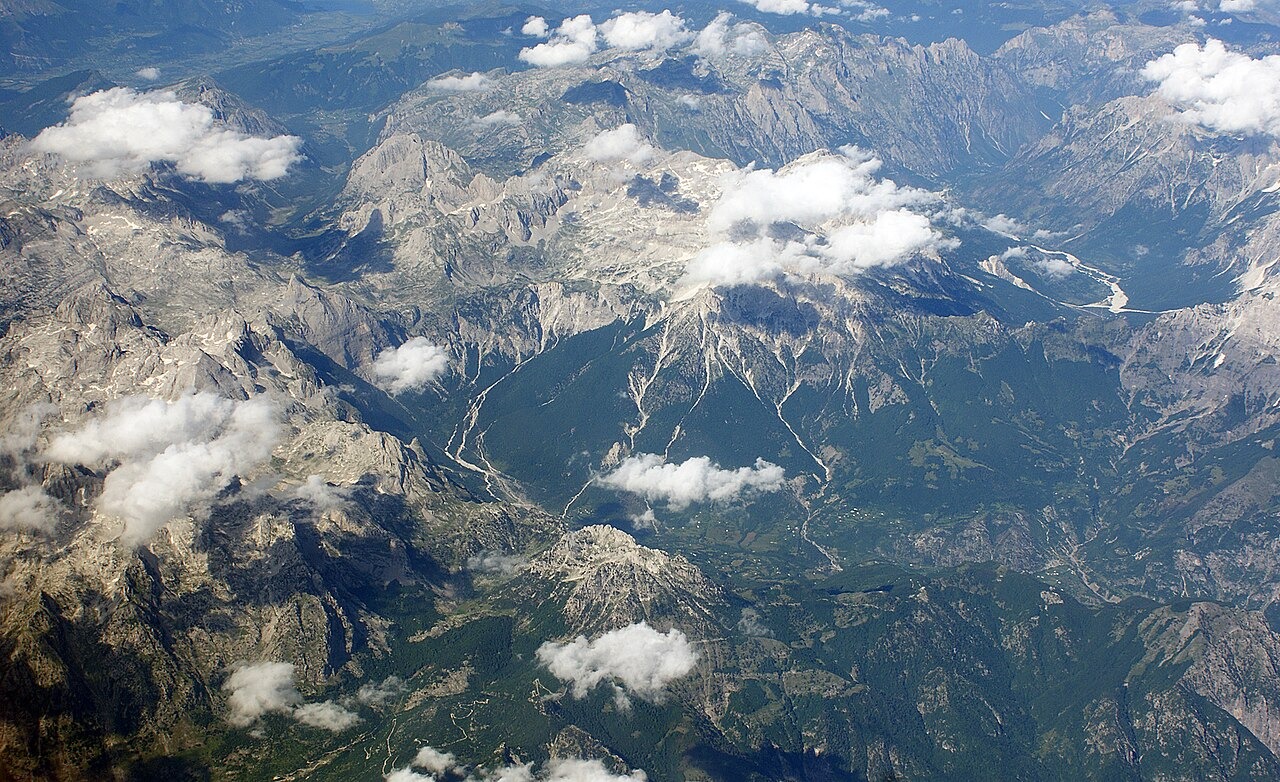
Glacial Valleys Cut into Limestone
Field reconstructions of Pleistocene glaciation have identified surviving glacial evidence in the broad interior valleys of the range. A study by Milivojević and colleagues estimated that a glacier in the Ropojana valley extended approximately 12.5 kilometres and that the Valbona glacier reached approximately 9.5 kilometres, figures derived from surviving field evidence. These length estimates represent past reconstructions, and the researchers documented evidence valley by valley across varied terrain.
Katun Settlements and Transhumant Herding
Seasonal herding has long organised life in the Prokletije highlands, with families moving livestock to high summer pastures each year and establishing temporary settlements known as katun. These structures were built from stone without mortar, a drywall technique suited to the local terrain. The Montenegrin national park management plan inventories both active and abandoned katun huts across several highland landscapes, including clusters around Volušnica, Zarunica and Zastan on the Gusinje side, and further huts in the Babino Polje area.
Three Protected Areas in One Mountain System
The Prokletije massif falls within separate national park designations established under three national legal systems. Montenegro declared Prokletije National Park in 2009. Kosovo's Assembly passed the law establishing Bjeshkët e Nemuna National Park in 2012, and the designation was gazetted in January 2013. Albania's Council of Ministers issued a resolution in January 2022 merging the Valbona Valley, Theth and Gashi River protected areas into the Albanian Alps National Park.