
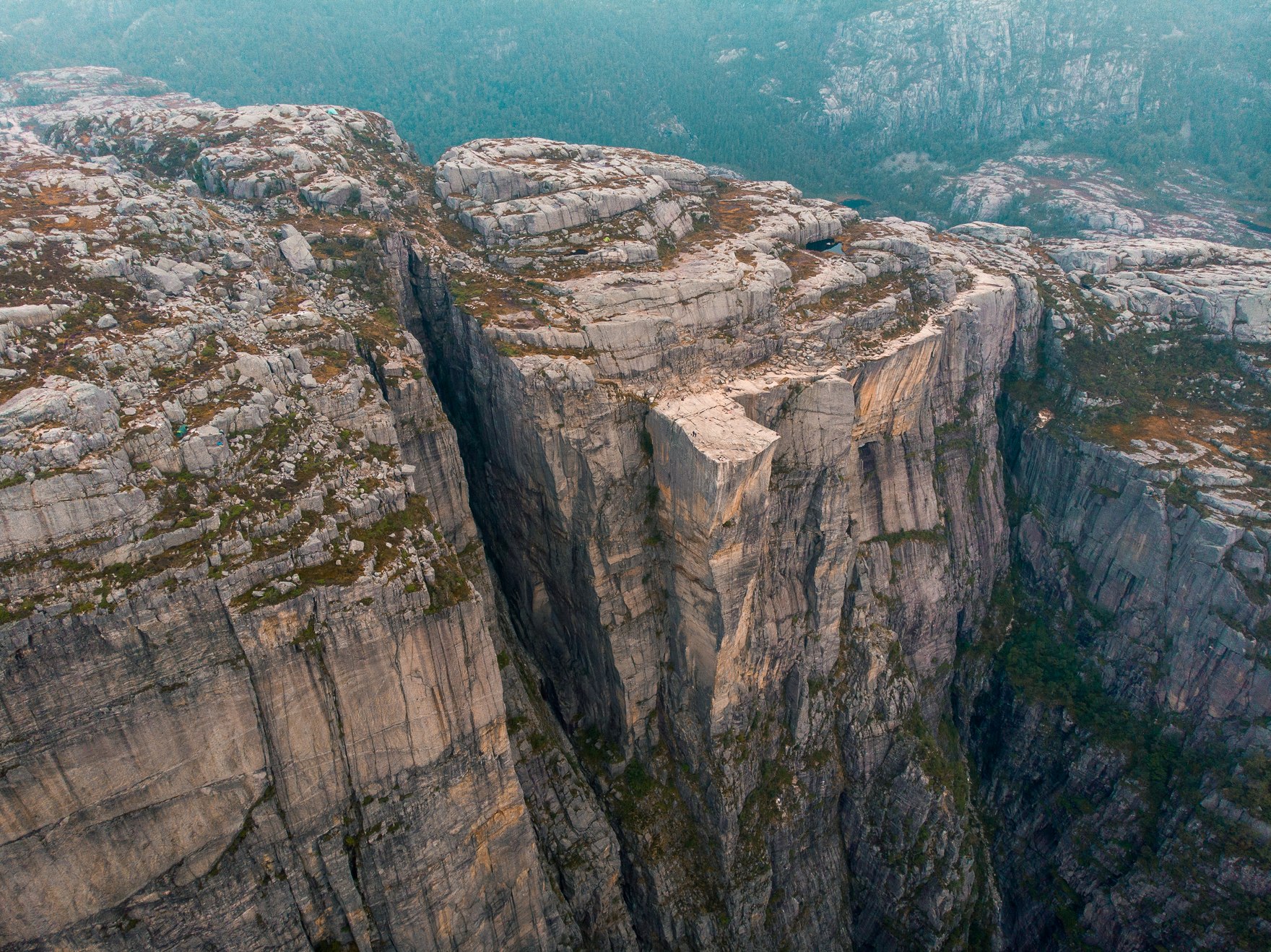
The Structure of the Platform
Joints crossing the platform's surface are visible in plan view and define its near-rectangular outline. Geologists associate the formation of pressure-release cracks with the removal of the overlying ice sheet approximately ten thousand years ago. That dating applies to the cracking process, not to the age of the ledge itself, which is part of the bedrock it projects from.
An Earlier Name
Before Preikestolen came into common use, the formation was known as Hyvlatonnå. The two names coexisted in local usage, with Hyvlatonnå representing an older layer of place-naming for the same rock platform.
Early Organised Tourism
The account of early organised tourism records that Thomas Peter Randulff observed the formation from the steamboat Oscar II in 1896. This episode belongs to the history of tourism on Lysefjord rather than to the broader history of human presence in the region, since people had lived around the fjord long before steamboat excursions began.