
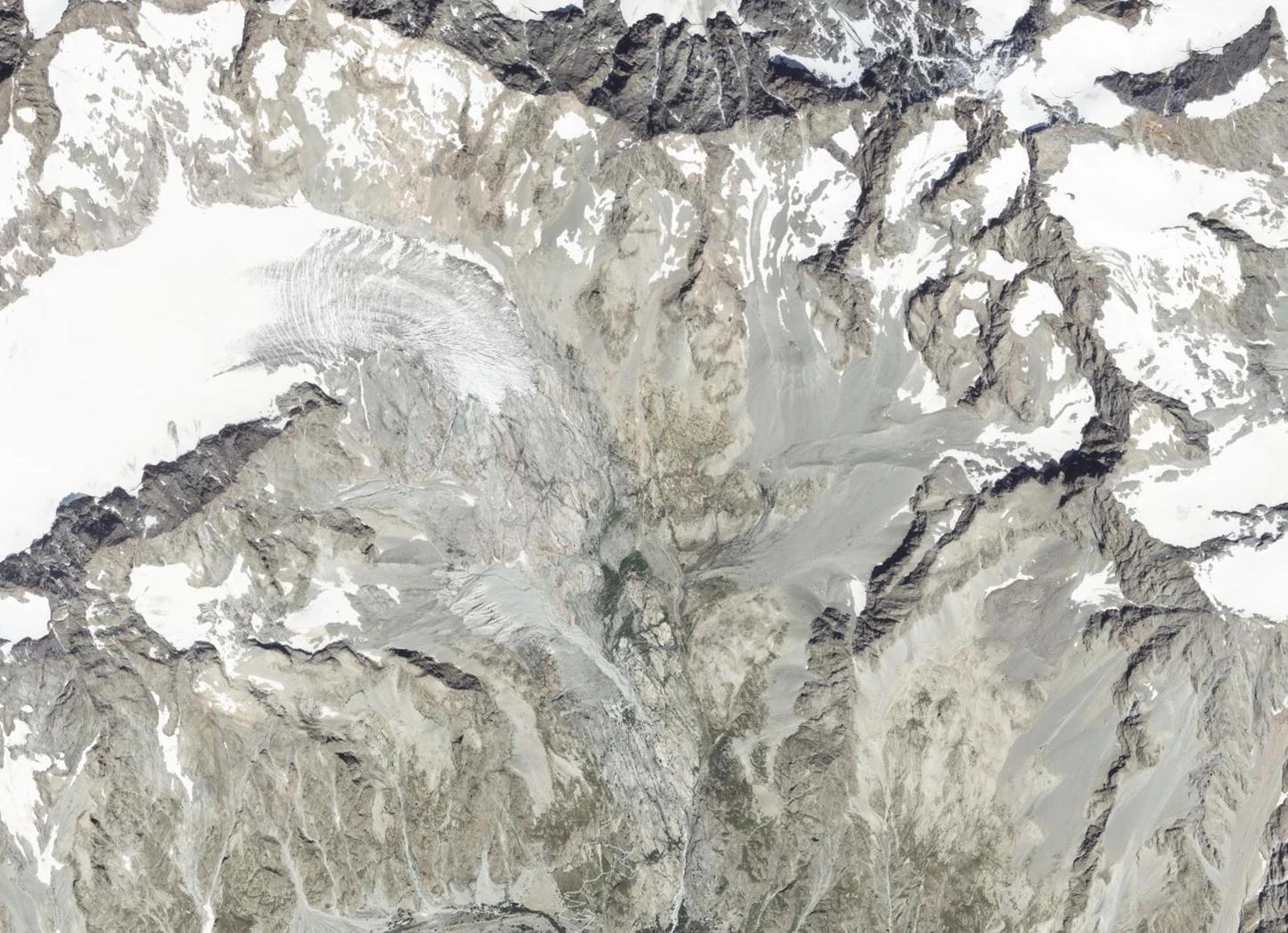
Ridge and Glacial Setting
The summit ridge of Pointe des Cinéastes presents vertical rock plates, steep gullies, narrow notches, and a succession of rocky steps that rise clear of the ice below. At the western foot of the ridge, the lateral moraine of the Pyramide glacier, a ridge of debris deposited along the edge of the ice, lies between the rock face and the broader Glacier Blanc basin. Écrins National Park and GEMSA field reports also identify moraines deposited by the former Tuckett glacier in the same terrain, distinguishing these accumulated debris belts from the active ice sheets and the bare ridge itself.
The 1936 Ascent and the Origin of the Name
Écrins National Park dates the first recorded ascent of the south ridge to 1936 and cautiously connects the event to viewpoint scouting for a film project. According to GUMS historian Michel Pinault, citing an account by Tiapa Langevin, filmmaker-climber Jean Vernet sought a high vantage from which to film the Barre des Écrins, and was accompanied on this ascent by local Ailefroide guides Pierre Engilberge and Jean Giraud.
The 1960 Documentary
A distinct and preserved record of the summit comes from Raymond Daboncourt's film Collective à la Pointe des cinéastes, which documents a Club Alpin Français group ascent and is held by the Cinémathèque d'Images de Montagne.
Southwest-Flank Route and Later Climbing
The Alpine Journal reported in its 1998 issue that climbers Codan, Elichabe, and Vincent established a new 250-metre route on the southwest flank of Pointe des Cinéastes, graded TD/TD+. The southwest flank offered a line up the face below the ridge that drew Vernet in 1936.