
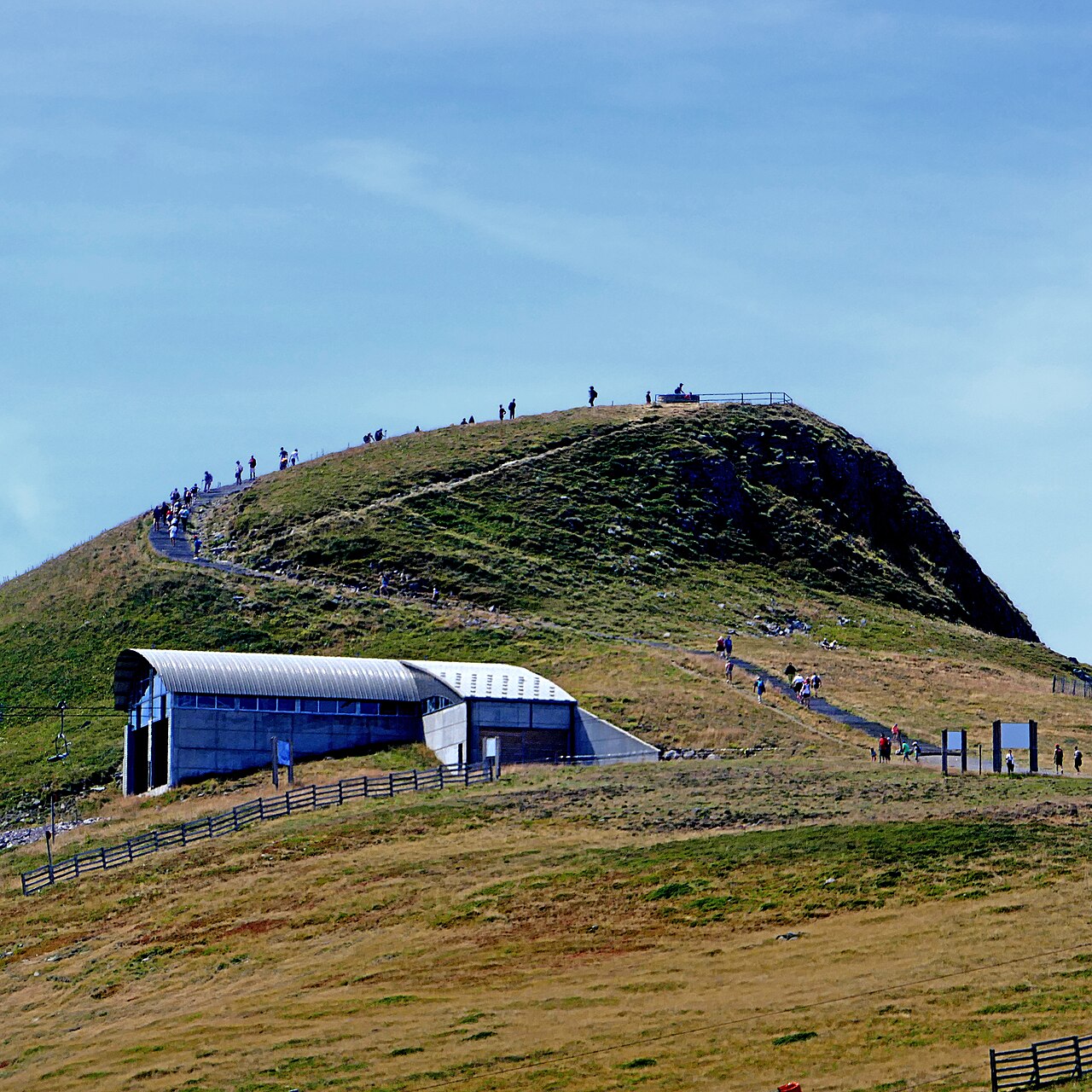
Geology: the remains of a volcanic edifice
The Plomb du Cantal does not crown a volcano still recognisable in its original form. It occupies the highest point of what the glaciers have left of an ancient Cantal stratovolcano, whose flanks erosion has truncated and remodelled over long periods. The ridges radiating from this summit, the deeply incised valley heads and the scree that covers certain slopes are all witnesses to this dual history: volcanic first, then glacial.
This superimposition of inherited processes gives the massif a varied topography, where the gentle forms of the high plateaux sit alongside the sheer walls sculpted by ice. The cliffs and scree fields mentioned within the Natura 2000 boundary follow this geomorphological logic, occupying the most vigorously incised sectors.
Natura 2000: a mosaic of habitats
The Natura 2000 area associated with the Monts et Plomb du Cantal brings together contrasting environments: bocage, woodland, montane grasslands, cliffs, scree and spring zones. This diversity of habitats, gathered within a relatively compact space, explains the ornithological richness that the Parc naturel régional documents for this site. The juxtaposition of open and closed environments, wet areas and rock faces creates conditions favourable to a varied birdlife.
The spring zones and the wetlands associated with the valley heads contribute to this diversity while also playing a hydrological role for the catchments descending from the massif. These features are incorporated into the Natura 2000 boundary, underlining their value beyond mere scenic interest.
Cols and post-nuptial migration
The valleys oriented to the north-east of the massif form corridors during post-nuptial migration. The Parc naturel régional cites among the reference points for observation the Col de Prat-de-Bouc and the Pas de Peyrol. These two passes, set within the radiating topography of the massif, channel bird movements that the configuration of ridges and valleys naturally guides. Their mention in the park's documentation signals their importance in the migratory geography of this volcanic complex.