
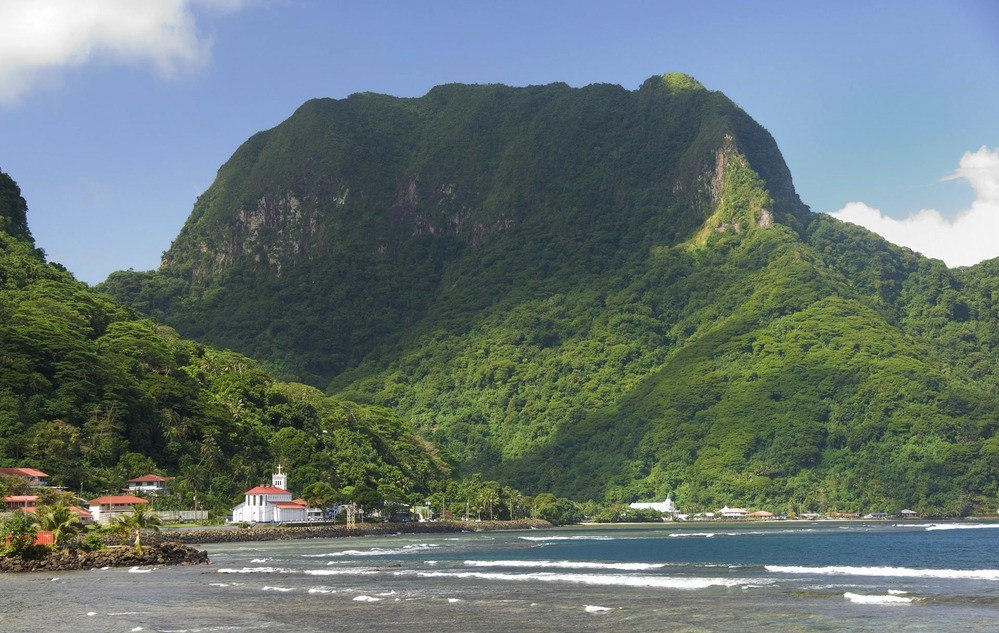
A Remnant of Earlier Volcanism
The National Park Service identifies Pioa among Tutuila's trachyte plugs, a category of volcanic feature representing the solidified cores of older eruptive vents. Trachyte is a relatively silica-rich volcanic rock, and its presence at Pioa marks the mountain as a remnant of an earlier phase of volcanism on the island. While surrounding terrain records more recent volcanic activity, Pioa's rock type places it in a distinct geological chapter of Tutuila's history.
Characteristic Soils and Montane Scrub
The natural history of American Samoa connects trachyte plug landforms with a recognizable suite of vegetation and soil conditions. The chalky-looking soils associated with trachyte plugs support montane scrub, and the NPS natural history guide notes stunted vegetation as characteristic of these settings. Pioa's summit and upper slopes exhibit this pattern, where the underlying geology exerts a direct influence on what grows and how it grows — an example of lithology shaping ecology at a relatively small geographic scale.
Summit Vegetation and Volcanic Soil
The park’s natural history guide associates these old trachyte plugs with montane scrub. Plants on their pale, chalky-looking soils often grow low. Pioa is one of the places where that link between rock, soil and vegetation can be seen at the scale of a single mountain.