
Volcanic Structure and Southern Relief
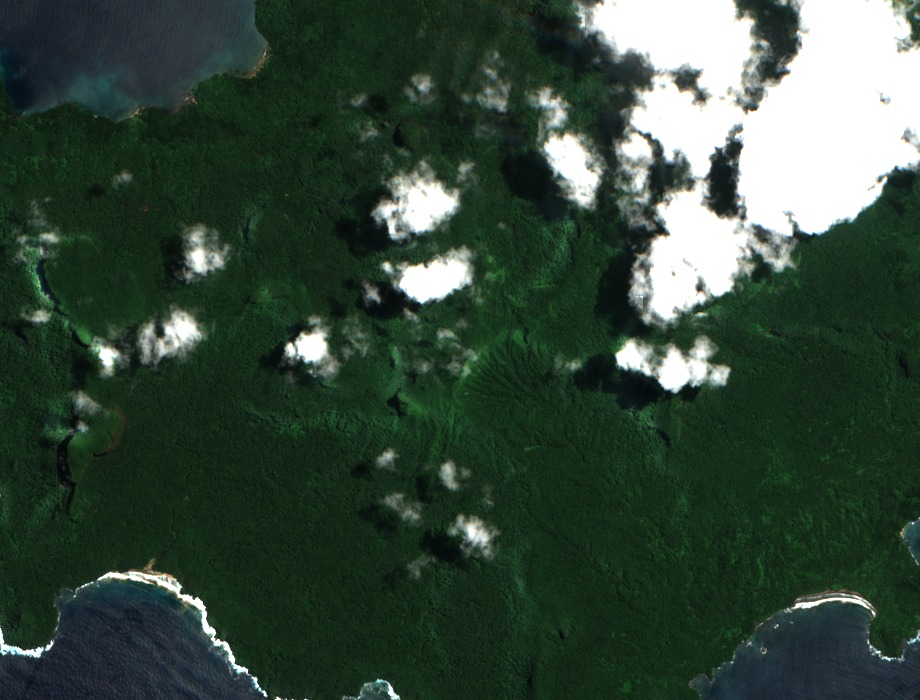
Príncipe belongs to the Cameroon Volcanic Line, a chain of volcanic centres extending across the Gulf of Guinea. The government's Third National Communication describes a northern platform that grades into pronounced ruggedness toward the south, where Pico do Príncipe defines the island's highest elevation. Neighbouring summits Pico Mencorne at 921 m and Pico Papagaio at 680 m rise separately within this same southern massif.
Ôbo Natural Park and Key Biodiversity Forest
The park protects primary forest that the Key Biodiversity Areas field assessment records as extending continuously from the shoreline to the summit zone. This intact forest corridor supports the ecological values that underpinned Príncipe's designation as a UNESCO Biosphere Reserve in 2012, a status covering the island and its adjacent islets. A separate World Heritage tentative submission, submitted to UNESCO, recognises the volcanic island group's outstanding geological character.
Archachatina bicarinata and Forest Dependence
The Príncipe giant land snail, Archachatina bicarinata, is endemic to the island and closely associated with surviving primary forest. A field survey published in Oryx documented rapid population decline and identified forest continuity as the principal factor governing the species' persistence. The same primary forest that defines the summit landscape therefore carries direct conservation significance for this endemic mollusc.