
Position in the Range and Geological Perspective
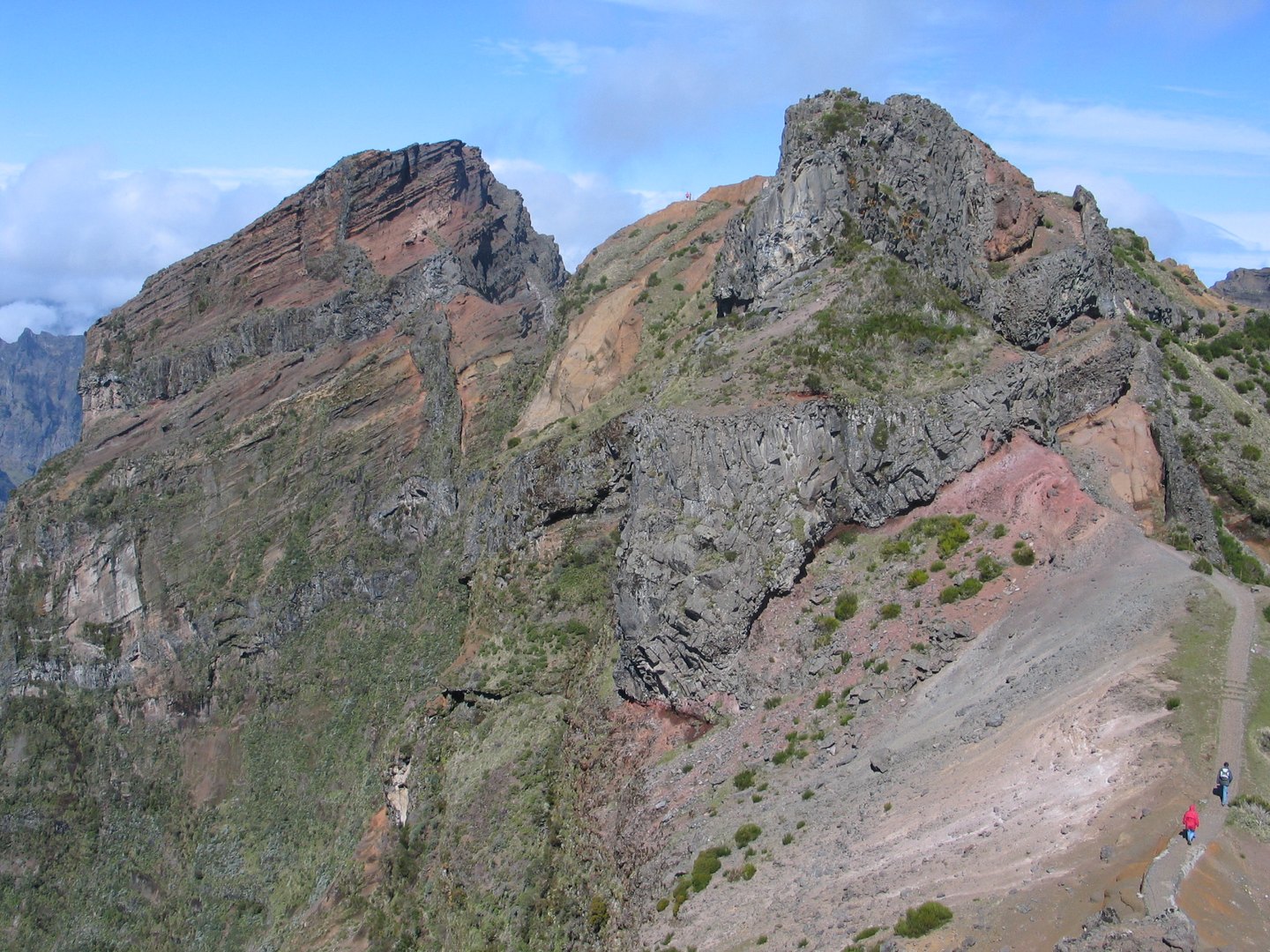
Pico do Areeiro is the third highest point on Madeira, surpassed by Pico Ruivo at 1,862 metres and Pico das Torres at 1,851 metres. It forms part of the Central Mountain Massif, whose rugged topography is not the result of recent eruptions but of the erosive action of water on volcanic rock over millennia. This differential erosion, acting with varying intensity depending on the resistance of the materials, has sculpted the ridges, ravines and steep slopes that define the profile of the range. The massif falls within the Natura 2000 network, a designation that recognises the ecological value of the island's highest elevations.
The shape the relief has taken is therefore a consequence of geology and climate, not of modern volcanic activity. The pyroclastic rocks that form the bedrock of the massif display variable resistance, which explains the irregularity of the landforms and the presence of vertical rock faces alternating with more gently sloping hillsides.
Views and Sunrise Photography
From the summit of Pico do Areeiro, in favourable visibility conditions, the horizon extends as far as Ponta de São Lourenço, the island's eastern cape, and to Curral das Freiras, the iconic interior depression enclosed by rocky walls. On days of exceptional atmospheric clarity, it is possible to glimpse the island of Porto Santo. The combination of altitude, central position in the range and the orientation of the summit makes this spot particularly sought after for watching the sunrise, when raking light intensifies the contrast between ridges and shadows across the volcanic relief.
The Vereda do Areeiro and the Three Peaks Crossing
The official trail known as the Vereda do Areeiro connects Pico do Areeiro to Pico Ruivo, linking three peaks along a crossing that traverses the slopes of the central range. The route does not pass directly over Pico das Torres, but instead skirts its flanks, incorporating this second peak into the geography of the crossing without including it as a mandatory waypoint on the main line. One of the most documented features of the route are the tunnels cut through volcanic tuff: structures hewn from the rock that, according to the official description, historically served as shelter for shepherds and livestock during crossings of Madeira's high mountains.
The route also includes a staircase cut directly into the rock, an element that reveals the scale of the works carried out to make passable a terrain of a markedly rugged nature. These traces of pastoral use give the crossing a historical dimension that overlays the purely scenic experience, connecting the morphology of the path to the traditional practices of Madeira's mountain communities.