
The number on the map and the mountain's elevation
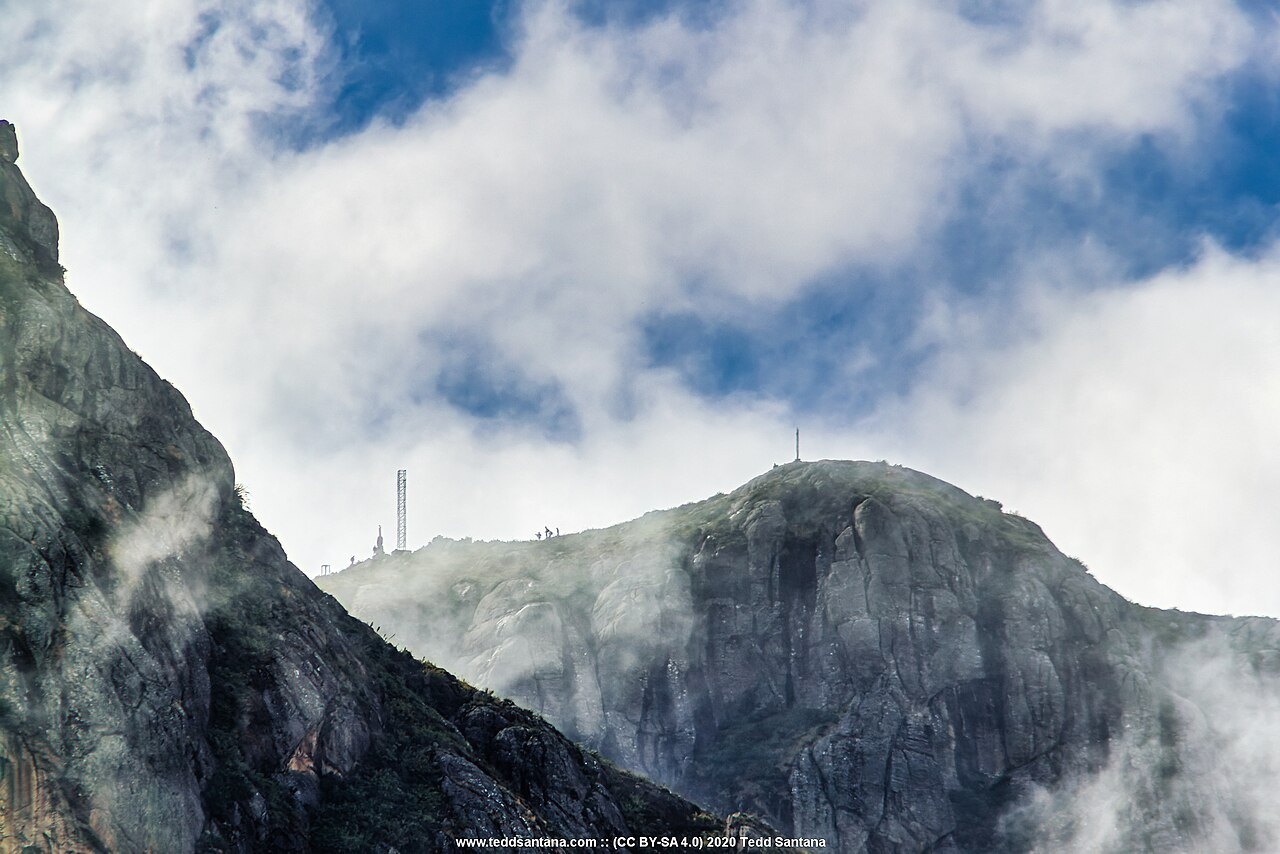
The third highest point in Brazil, Pico da Bandeira is the highest point of the Serra do Caparaó. ICMBio publishes an elevation of 2,892 metres. In the table of highest points in the Statistical Yearbook of Brazil, IBGE records 2,891.4 metres, based on the conversion of satellite measurements to elevations referenced to sea level.
In 2016, an earlier IBGE revision had already reduced Bandeira's elevation by 66 centimetres relative to the previous survey, without altering its position in the national ranking. These figures show how the reference used to measure elevation can change as geodetic models are refined.
One ascent from Minas, another from Espírito Santo
On the Minas Gerais side, the main reference points are Tronqueira and Terreirão. Tronqueira marks the highest point reached by the road on that side. Terreirão, higher up, is accessed on foot and serves as a support base for the ascent to the summit. In Espírito Santo, the access via the Pedra Menina area reaches Casa Queimada, from where the trail passes Pedra Duas Irmãs and Pico do Calçado.
The two approaches help identify the crests that meet at Bandeira. On the Espírito Santo route, Calçado is already above 2,800 metres. From the summit, Pico do Cristal and Pedra Menina provide further reference points for situating Bandeira within the range.
Atlantic Forest above the treeline
Near the top, the rocky terrain opens up into high-altitude grasslands. These form part of the landscape protected by Caparaó National Park, established in 1961 and extending across both states. The contrast between the forest on the lower slopes and the open vegetation near the summit is one of the most visible signs of the change in altitude.
The meaning of climbing before dawn
Watching the sunrise is part of the culture of visiting Bandeira. For those who spend the night at one of the support areas, the pre-dawn ascent focuses the experience on the transition from darkness to the first light over Caparaó. ICMBio also describes the daytime alternative. The park's official pages set out the visiting conditions and the information needed to plan an overnight stay.