
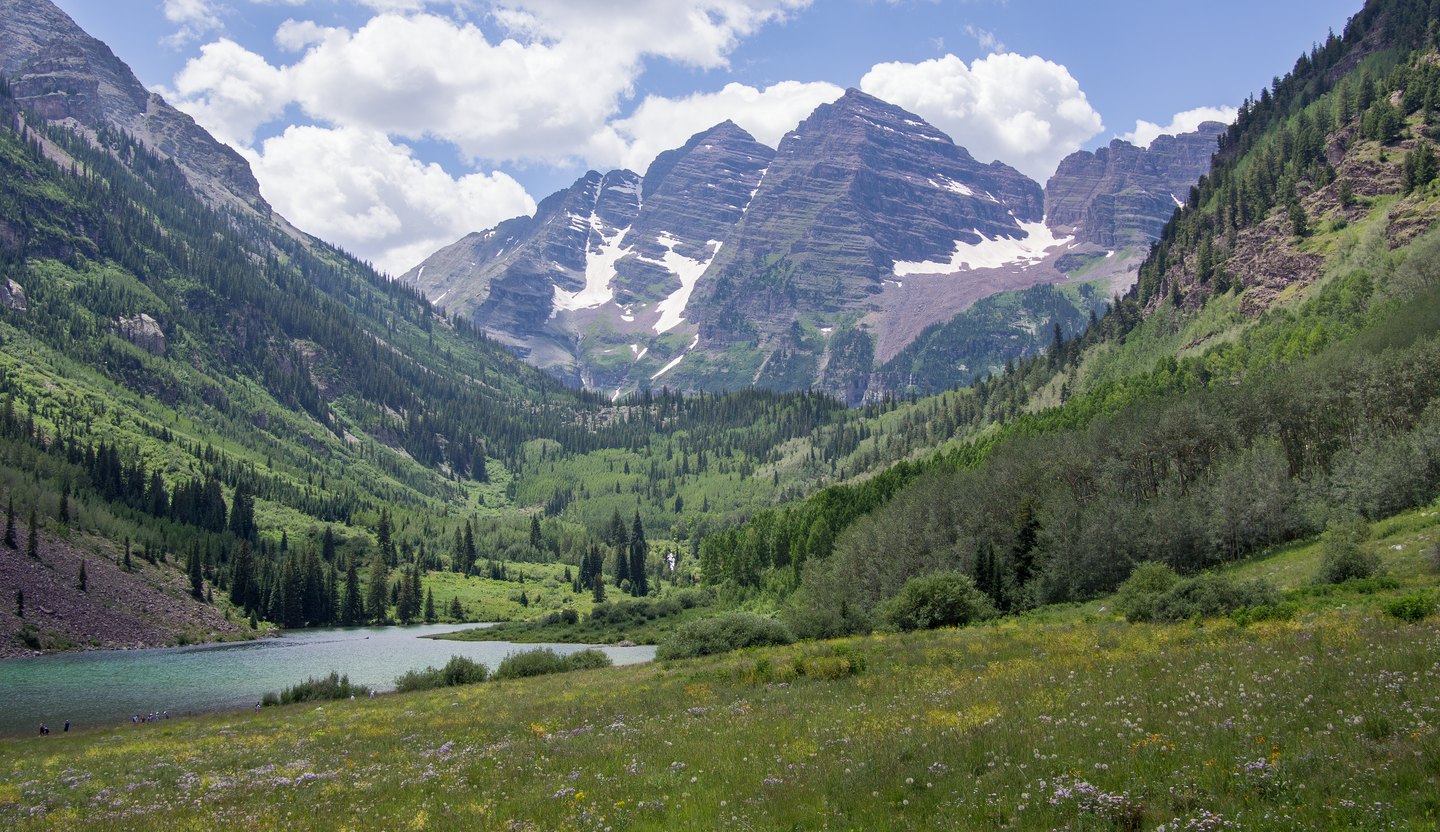
Red Beds and Sedimentary Geology
Both Maroon Bells summits belong to the Maroon Formation, a sequence of red sedimentary beds that the USGS identifies as defining the visual and geological character of the group. USGS reporting notes that intrusive heat altered some lower beds at Maroon Peak specifically, with red beds persisting above that contact. That north-south unit boundary applies to Maroon Peak and should not be assumed to extend to North Maroon, which is a geologically adjacent but distinct summit.
A Pyramidal Summit in Early Climbing Accounts
A 1930 account in the American Alpine Journal described both the north and south peaks as pyramidal rocky summits and noted loose rock on the terrain. That account documents climbers active on both peaks in the early 1930s and recording the character of the ridge in mountaineering literature. It does not resolve questions of first ascent, and the source notes do not support any such claim.
Identifying the Summit Within the Bells
The U.S. Forest Service topographic map names North Maroon Peak and Maroon Peak individually, using Maroon Creek and the Crater Lake basin as reference features for distinguishing the two summits. The two are frequently grouped under the shared name Maroon Bells, but they represent separate high points with their own mapped coordinates and geological contexts.