
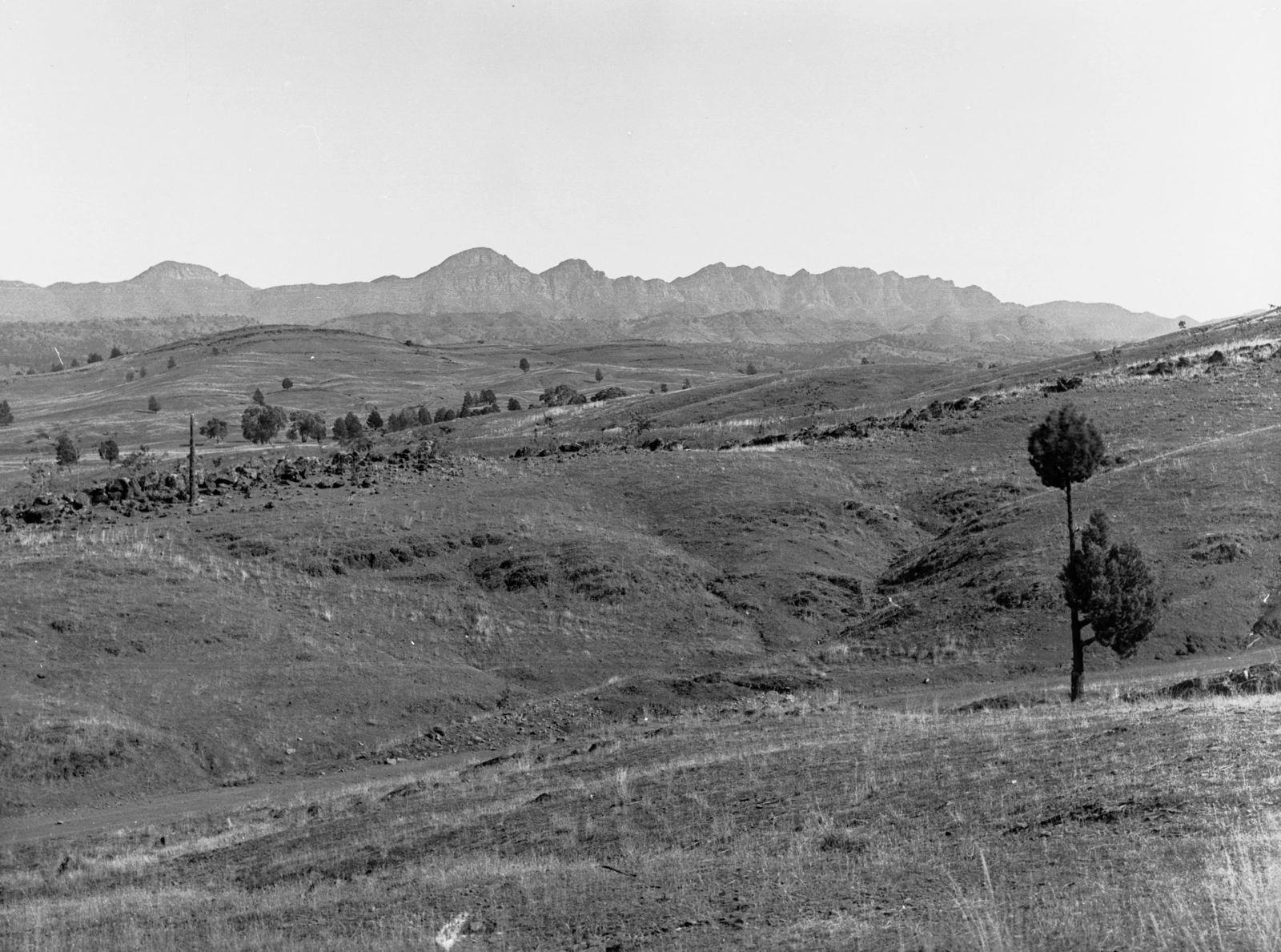
The highest point on the rim
In a glass-plate photograph taken on 6 June 1932, the rim of Ikara rises above the open country. Ngarri Mudlanha stands on its northwestern side. At 1,171 metres, it is the highest peak in the Flinders Ranges. The History Trust of South Australia preserves the photograph as negative GN08487.
Why the basin has a rocky rim
Around 500 million years ago, movements in the Earth’s crust bent the sedimentary layers into folds. At Ikara, the beds dip toward the middle of a basin. Erosion removed the adjoining domes and exposed the harder beds along the rim. The state heritage listing, confirmed in June 2014, records fossil impressions from the Ediacaran period in the Rawnsley Quartzite of the wider landform.
Adnyamathanha Country
Ngarri Mudlanha is the Adnyamathanha name of the peak. In the account shared by the national park, Yurlu the kingfisher follows a route through the ranges, and Akurra, ancestral serpents, are part of the story of Ikara. The peak remains a place of cultural significance for the Adnyamathanha people, who ask visitors to stop short of the summit.