
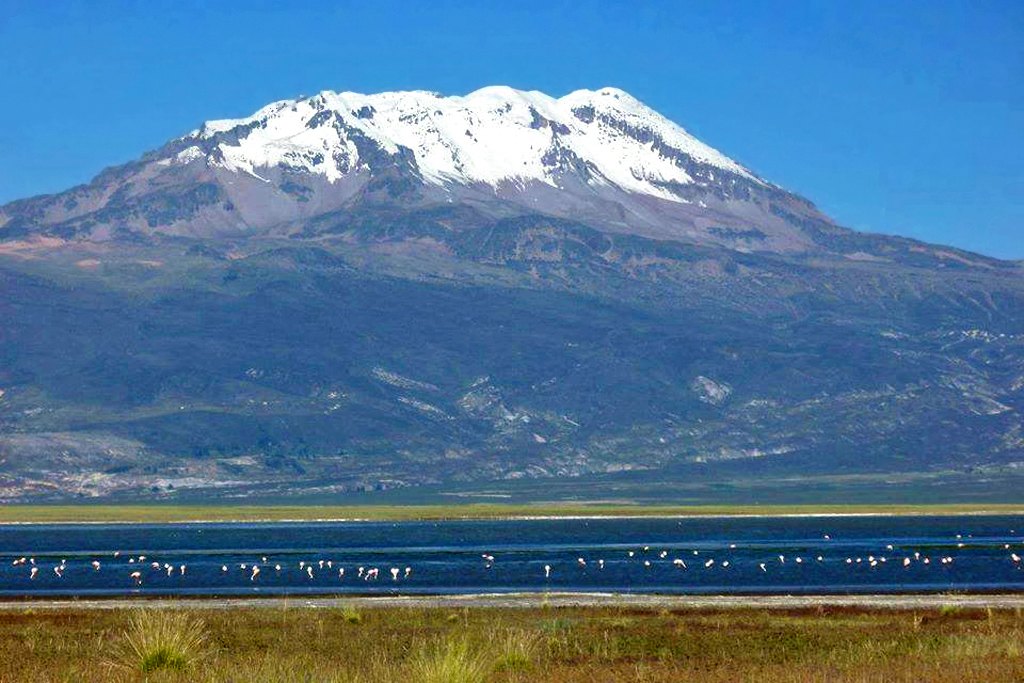
Morphology and volcanic geology
The structure of Sara Sara follows the stratovolcano model, with successive layers of andesitic material forming a well-preserved cone. The feature recorded in the Smithsonian catalog is a tongue of lava with prominent margins that extended eastward during some Pleistocene eruptive episode. The Instituto Geofísico del Perú has produced a dedicated fact sheet for the volcano and an associated hazard map.
Inca capacocha and ritual context
In 1996, the funerary assemblage of a young woman was recovered on the volcano; the circumstances have been studied by researchers at the Pontificia Universidad Católica del Perú. The analysis published by the PUCP examines the offerings associated with the find and situates it within the Inca practice of capacocha, interpreting it as a propitiatory and agrarian ritual. The study highlights the value of the object assemblage for understanding the symbolic dimension of these ceremonies on the volcanoes of the southern Andes.
Geographic position and hazard documentation
The location of Sara Sara, between the Parinacocha basin and the slope draining toward the Ocoña, corresponds to the southern tip of Ayacucho. The IGP has produced a characterization fact sheet and a hazard map for this volcano, documents that form part of Peru's inventory of volcanic threats. The last period of activity recorded in those sources remains the Pleistocene.