
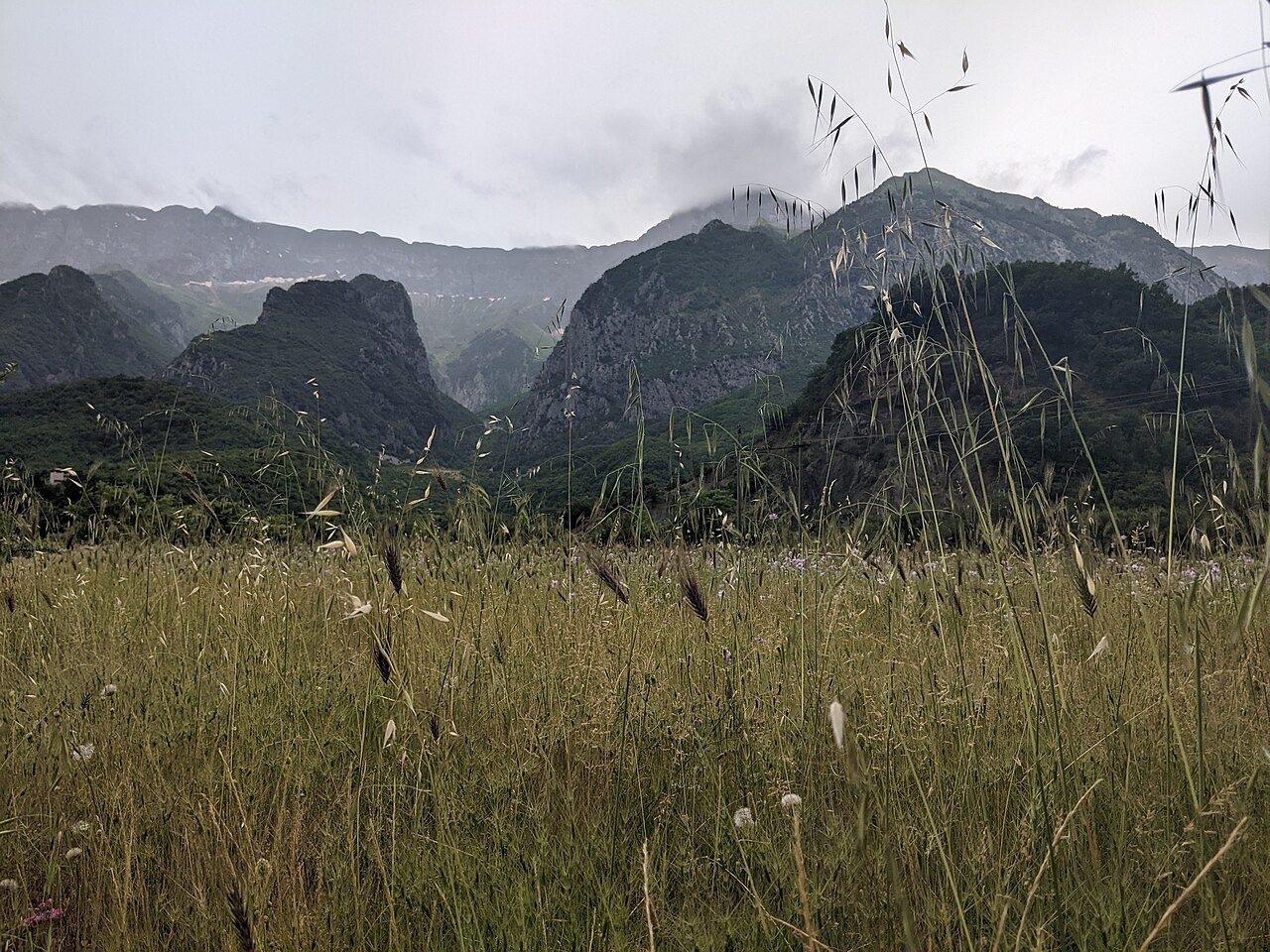
Limestone Range and Eastern Wall
Nemërçka is composed of Cretaceous carbonate rock folded into a mountain range. The upper terrain includes the deep limestone glacial cirque of Gryka e Kazanit, sheltered by a wall estimated at almost 1,000 metres in the 2024 study.
The Gryka e Kazanit Glacieret
Field measurements published in 2024 by Gachev and colleagues recorded a body of snow and firn in the Gryka e Kazanit cirque at elevations between 1,550 and 1,650 metres. In September 2022 the body covered around 1.5 hectares. By November 2023 it had contracted to less than one hectare and exposed multiple annual firn layers, firn being older compacted snow. The study classified the body as a glacieret and proposed it as Europe's southernmost, attributing its persistence in part to shade cast by the cirque wall.
Alpine Flora and Carbonate Plant Communities
A survey conducted by researchers at the University of Tirana and published in the Journal of Natural Sciences recorded 560 plant taxa belonging to 69 families across Nemërçka. A separate comparative study examined alpine vegetation on the carbonate-rich slopes of Nemërçka alongside those of Mount Smolikas in Greece, a mountain underlain by ophiolitic rock, to contrast how bedrock chemistry shapes high-altitude plant communities. The limestone substrate of Nemërçka produces a distinct assemblage from the serpentine-influenced vegetation of Smolikas.