
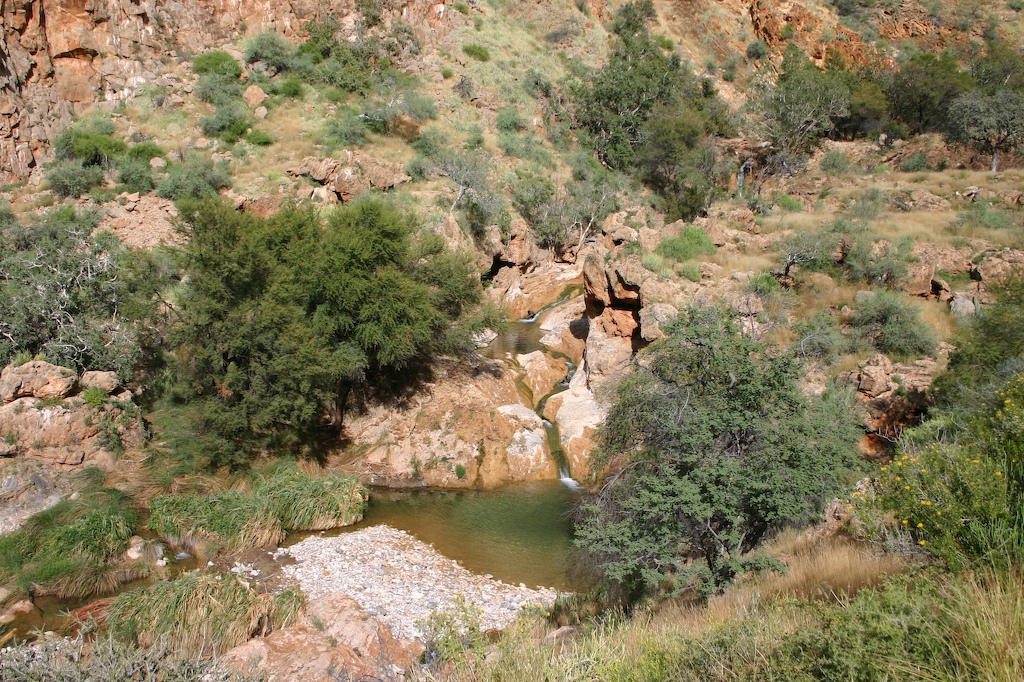
Thrust Geology and Long-Term Exhumation
The range preserves stacked rock layers that were originally transported horizontally along thrust faults before later uplift and erosion isolated the block. The 2024 American Geophysical Union thermochronology study used low-temperature dating methods to constrain the timing and depth of this exhumation, revealing how the present plateau surface relates to the deeper burial history of the thrust sheet.
Karst Hydrology and Dolomite Recharge
Rainfall enters the range through fractured dolomite and limestone, following karst pathways that make surface water scarce while sustaining subsurface flow. A University of Namibia study investigated groundwater recharge mechanisms within this karst system, finding that seasonal precipitation can penetrate deeply through fissured rock. The research contributes to understanding water availability across a landscape where springs reflect geology rather than consistent discharge.
From Zebra Park to Namib-Naukluft Park
The Naukluft Mountain Zebra Park was established in 1968 specifically to protect Hartmann's mountain zebra, a subspecies adapted to rocky terrain in Namibia and southern Angola. In 1979 the Namibian Ministry of Environment merged the zebra park with adjacent protected areas and state land to form Namib-Naukluft Park, consolidating management across the desert and mountain habitats that now frame the range.