
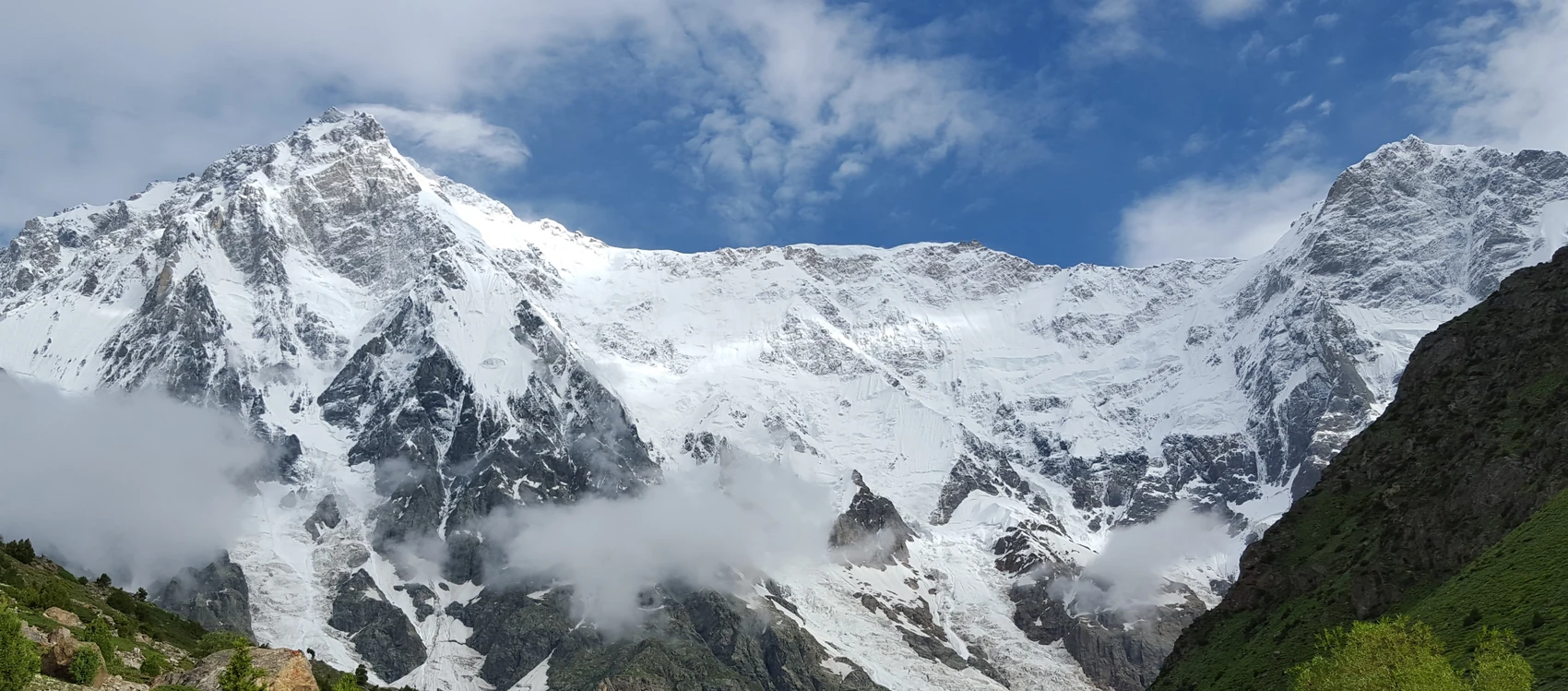
Glacial Topography and the 1934 Scientific Expedition
Expedition geographer Walter Raechl, working with geologist Peter Misch during the 1934 German Himalayan Expedition, documented shifts in the upper Rupal glacier area from broad U-shaped cross-sections in higher glacial valleys to steep V-shaped river gorges lower down. Raechl also distinguished avalanche-fed glaciers occupying zones directly beneath the steep walls from large firn-collecting basins above, recording structural differences within a single glacial system.
First Ascent of the Face, June 1970
Karl Herrligkoffer led expeditions to the Rupal Face in 1964 and 1968 before the face was climbed. On 27 June 1970, Reinhold and Günther Messner reached the summit by the Rupal route and descended via the Diamir side, where Günther died. The following day, Felix Kuen and Peter Scholz also summited by the Rupal route and descended via the Merkl Gully.
The 2005 Central Pillar and Piolet d'Or
In September 2005, Vince Anderson and Steve House pioneered the Central Pillar of the Rupal Face over six days of ascent, starting above the Bazhin Glacier, following a rock buttress sheltered from avalanche exposure, then ascending mixed rock and ice terrain before joining the Messner route in the upper section. They descended the Messner route over two days.
The Central Pillar route gains approximately 4,100 m. The 2006 Piolet d'Or was awarded for the ascent.