
Protestant Mission and the Sebwato Church of 1892
Following the mission's arrival around 1890, Nikodemu Sebwato designed a hilltop structure that was completed in 1892. A subsequent brick-and-reedwork church, consecrated in 1904, combined Ganda craftsmanship with Gothic architectural form. That building was destroyed by lightning and fire in 1910, bringing the second phase of construction on the hill to a close.
Arthur Beresford Pite's Cathedral, Consecrated 1919
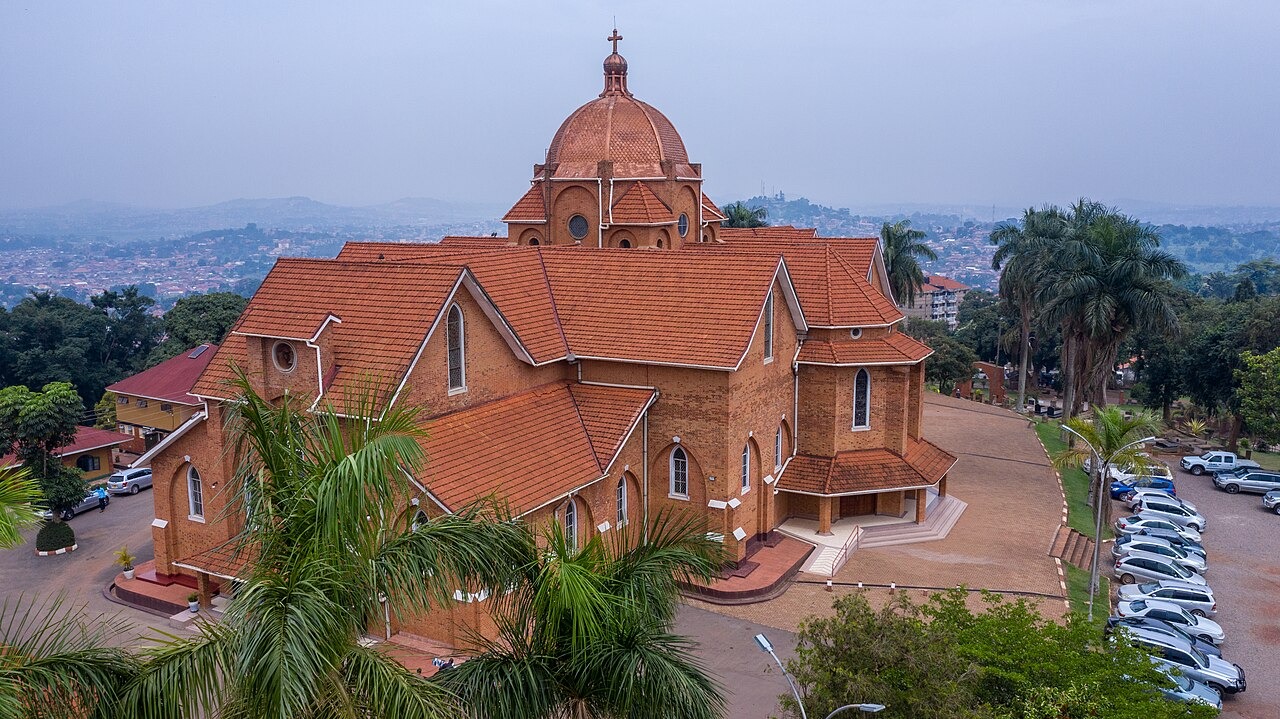
The present St Paul's Cathedral was designed by Arthur Beresford Pite and consecrated in 1919. Construction involved excavating into the hilltop to seat the foundations. The Diocese of Namirembe records that the fittings draw on local craftsmanship, including a pulpit made at King's School Buddo, reflecting the integration of Ugandan skill into the building's fabric.
Namirembe in the Kampala Cultural Landscape
The KCCA Kampala Physical Development Plan identifies Namirembe and Mengo together as a culturally significant hill landscape within the city. The cathedral remains the seat of the Anglican Diocese of Namirembe, and the hill continues to function as a focal point for religious and civic life in the Ugandan capital.