
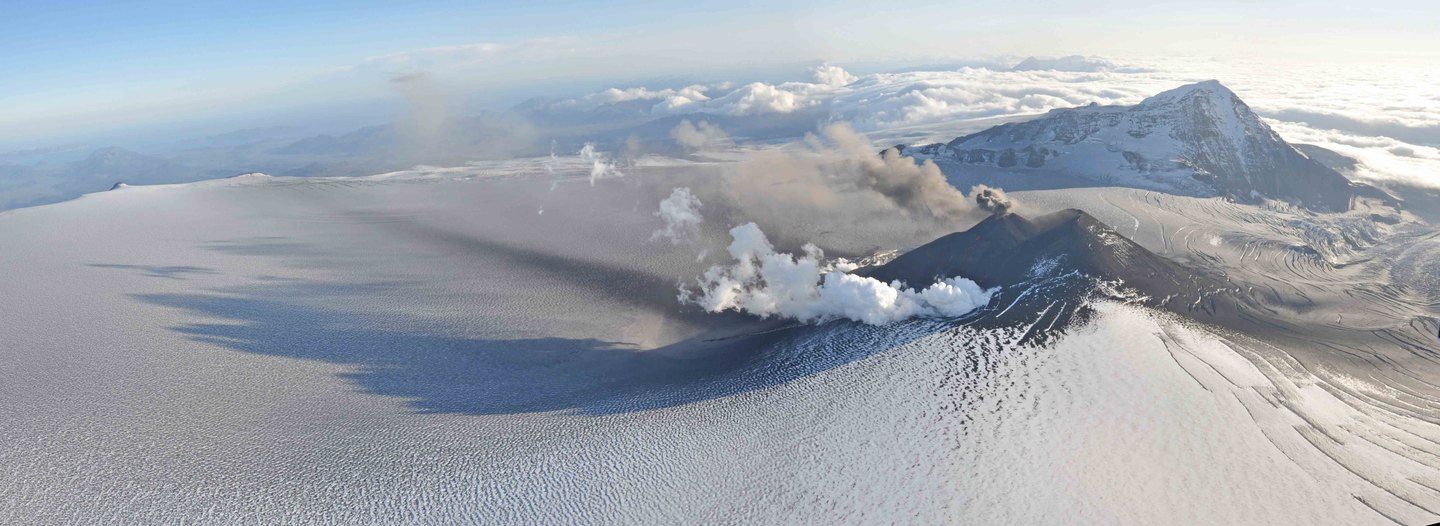
The 2018 Eruptive Episode
From early September through late December 2018, Veniaminof's intracaldera cone produced lava fountains, lava flows, and intermittent ash emissions. Satellite imagery and overflight observations captured lava melting ice and snow on the south side of the inner cone, generating visible steam. Concentric subsidence cracks appeared around portions of the lava flow field during this period.
Monitoring Methods and Observations
The Alaska Volcano Observatory tracked the 2018 activity through a seismic network and infrasound sensors combined with satellite data, aerial photographs, and the Perryville webcam. These overlapping methods allowed observers to distinguish successive stages of the eruption and document how each tool contributed to understanding the event's progression.
Ice, Caldera, and the Character of the Summit
The ice-filled caldera gives Veniaminof a summit environment in which volcanic heat and glacial ice interact directly during eruptive periods. The 2018 episode demonstrated this concretely: lava advancing across glaciated terrain on the south side of the inner cone produced steam that appeared in satellite imagery and overflight records. This interaction between the intracaldera cone and the surrounding ice cap shapes how eruptions at the inner cone are expressed at the surface.