
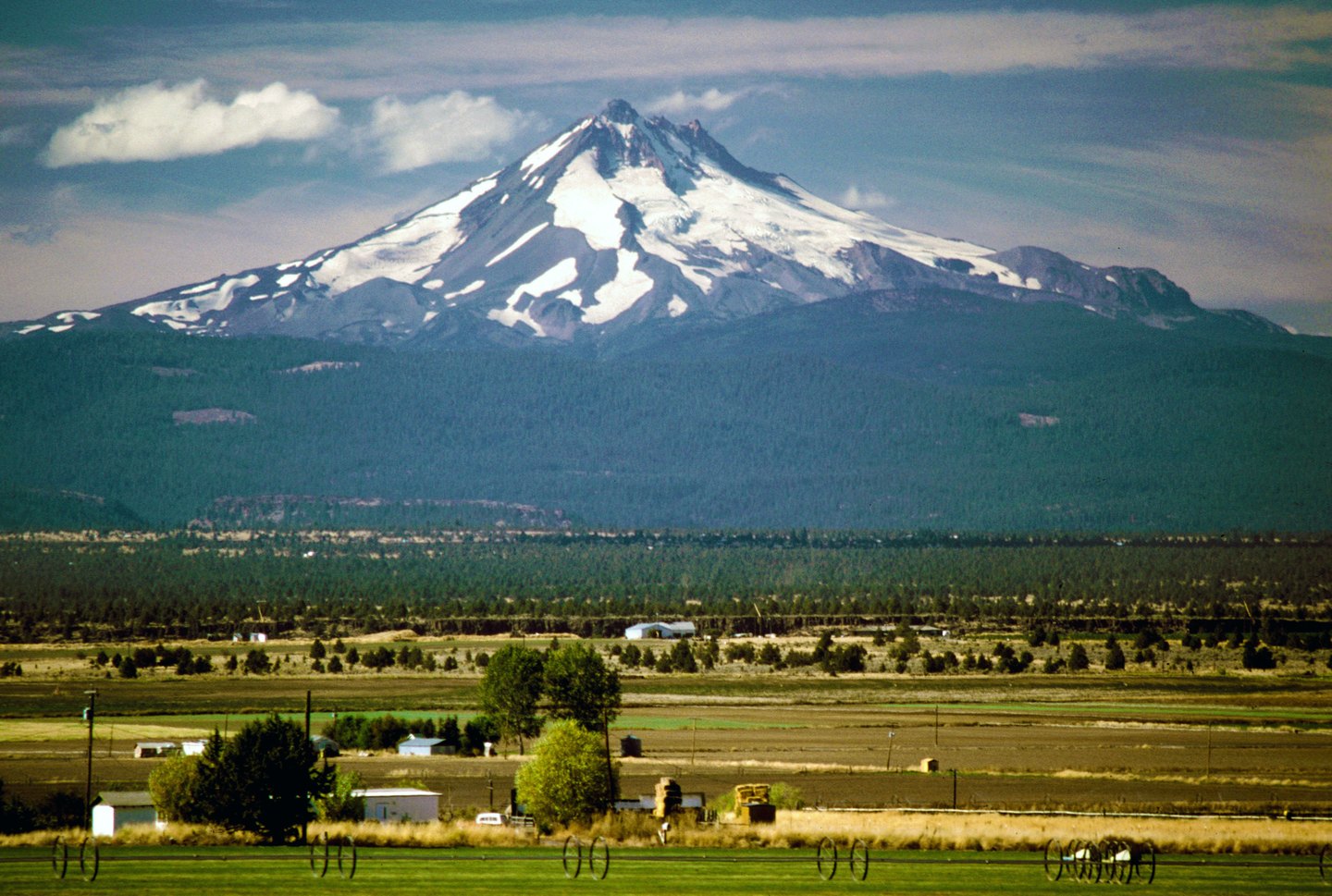
Pleistocene Eruptions and Ash Dispersal
The largest recognized explosive eruption in Jefferson's history occurred during the late Pleistocene, depositing ash that reached as far as present-day Arco, Idaho. The precise age of that event remains uncertain. The volcano's most recent eruptive episode coincides broadly with the last major glaciation, which culminated around 15,000 years ago. That figure marks the glacial culmination, not the date of a specific eruption.
Composite Cone and Surrounding Volcanic Field
The USGS distinguishes the long-lived central composite volcano from a surrounding population of shorter-lived monogenetic centers. Those centers constructed a broader volcanic upland composed of dacite domes, basalt and andesite lavas, and small cones. That regional assemblage is distinct from the eruptive history of the central summit cone.
Cone Construction and Eruptive Diversity
Jefferson's composite cone records contributions from both explosive and effusive eruptions. Explosive episodes distributed pyroclastic material outward from the vent, and effusive eruptions added successive lava flows to the cone's structure across the same long eruptive interval.