
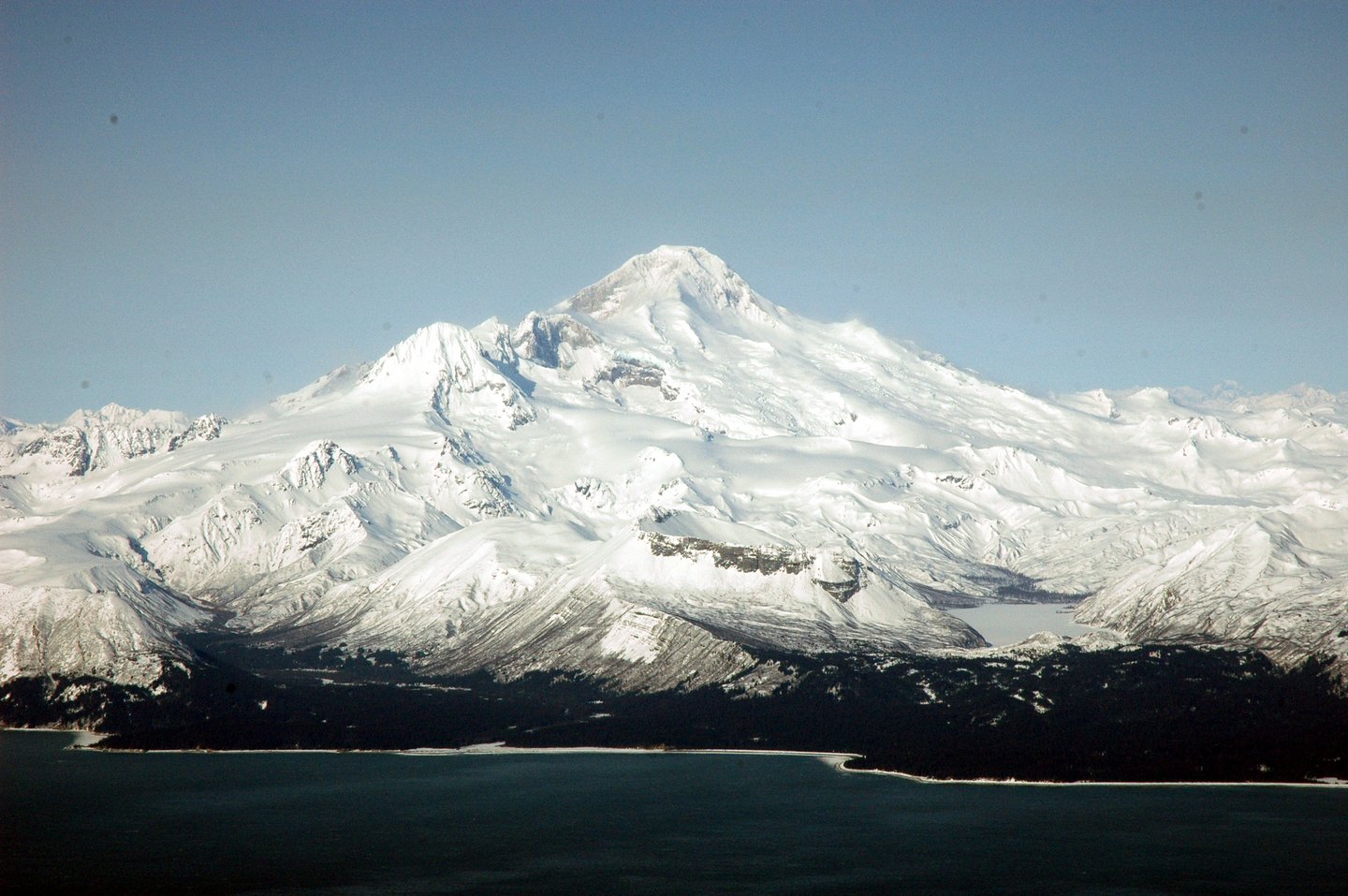
Ice–Rock Avalanches on Red Glacier
Two large avalanches descended the eastern flank via Red Glacier, one in May 2016 and another in June 2019. A published study using seismoacoustic records reconstructed both events and found them remarkably similar in character. The approach proved valuable because Iliamna's remote location and persistent cloud cover make direct observation rare, and the two events offer a documented case of how avalanches can be studied through geophysical signals.
Seismic Signals and Volcanic Monitoring
The seismic records from those avalanches reflect the motion of ice and rock, not subsurface volcanic processes, and do not indicate eruption. The Alaska Volcano Observatory documents fumarolic activity at Iliamna and studies gas emissions and seismicity to characterize the volcano's hydrothermal system.
Glaciated Flanks and Deposit Geography
Avalanche deposits occur on multiple flanks of the mountain, consistent with its broad profile and extensive glacier coverage. Umbrella Glacier to the southwest and Red Glacier to the east occupy distinct aspects of the cone and represent separate features with separate documented histories. The erosion visible across Iliamna's flanks reflects the deep glaciation that has shaped the cone over time.