
Hale, the Sun, and Carnegie Support
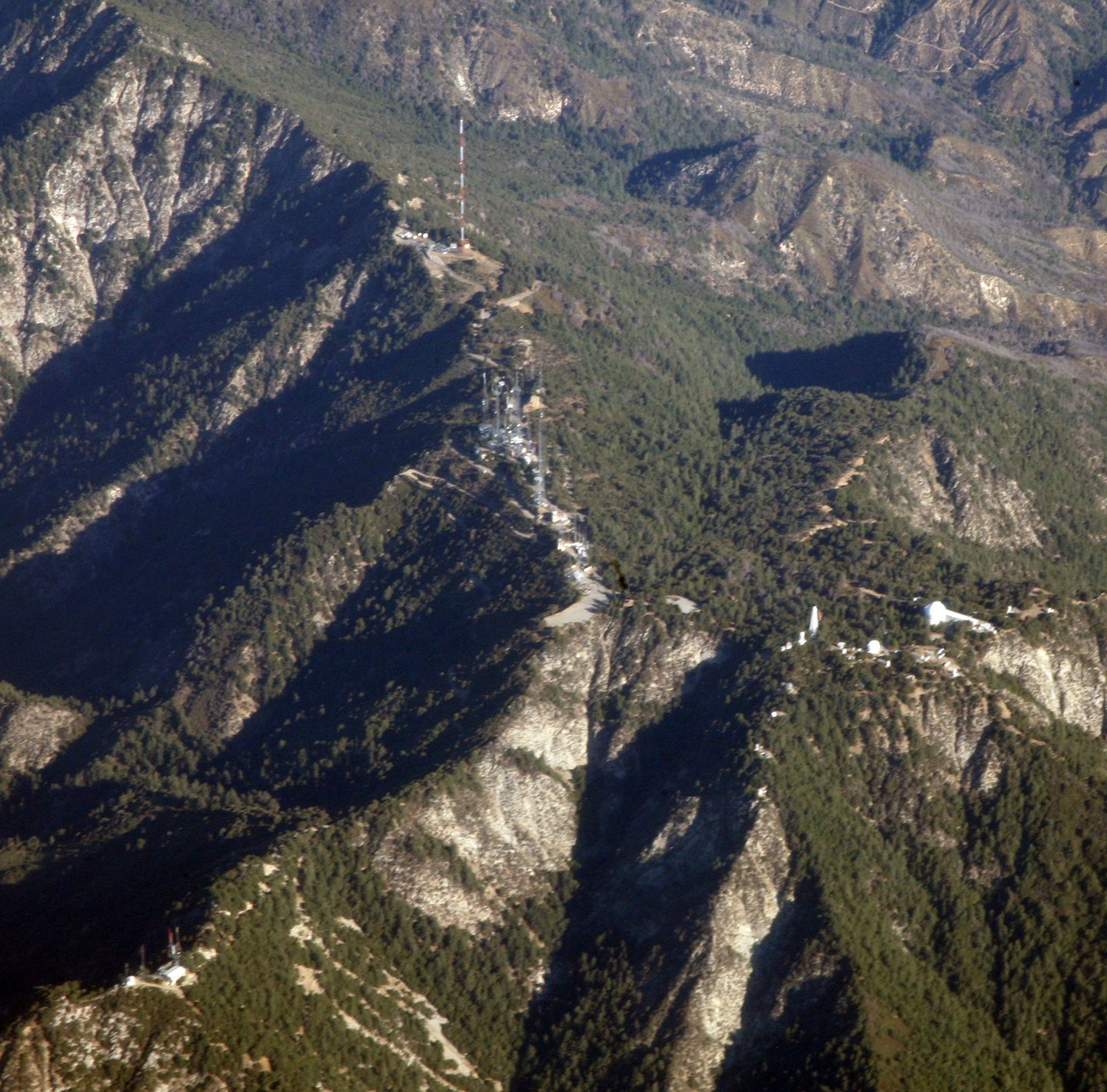
George Ellery Hale chose the summit for its stable observing conditions and founded the Mount Wilson Solar Observatory with Carnegie Institution support in 1904. The Snow solar telescope began operating the following year. In 1908 Hale used the 60-foot solar tower — a vertical instrument distinct from the nighttime reflectors built later — to measure magnetic fields in sunspots.
The 60-Inch and the Hooker Telescope
The 60-inch reflector, named for its mirror diameter, saw first light in 1908, extending the observatory's work into nighttime stellar observation. The 100-inch Hooker telescope followed in 1917, when a crew hauled the finished mirror up the mountain to its dome.
Hubble, Andromeda, and Galactic Distance
Using the Hooker telescope, Edwin Hubble observed a Cepheid variable in the Andromeda nebula in 1923 and calculated a distance placing Andromeda well beyond the Milky Way. His 1929 paper related galaxy distances to their recession speeds. The expanding-universe framework that emerged from this period drew on contributions from multiple scientists, and Hubble's Mount Wilson observations were a central part of that body of evidence.