
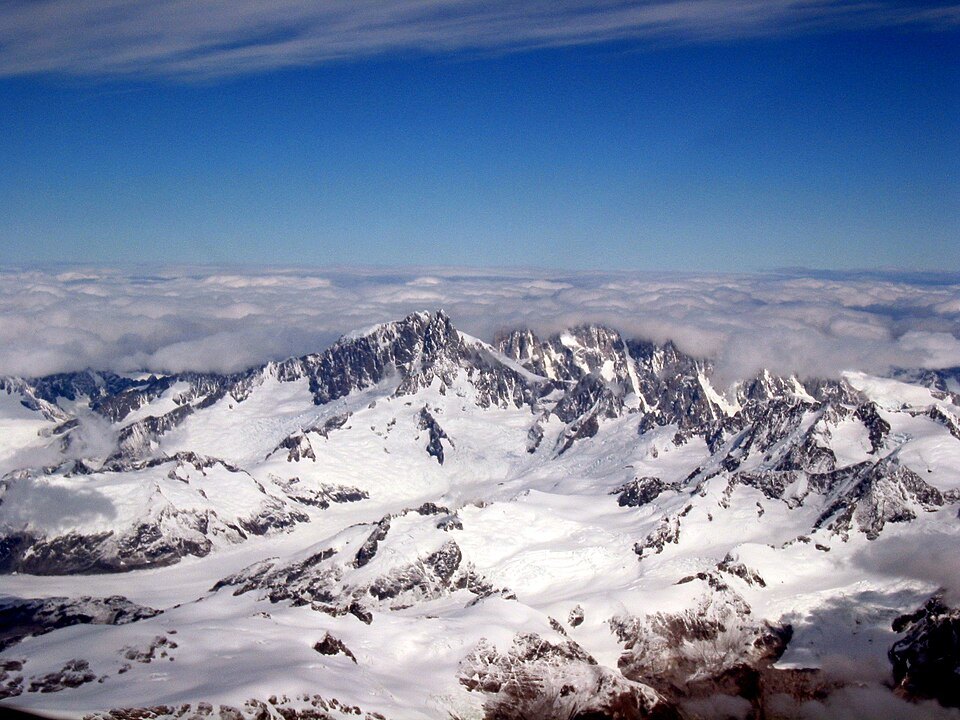
The Mystery Mountain
In 1925, Don and Phyllis Munday were on a trip to Mount Arrowsmith on Vancouver Island when they spotted a distant peak they believed might surpass Mount Robson — then accepted as the tallest summit entirely within British Columbia. Don Munday recorded that a compass bearing placed the peak along a line passing slightly east of Bute Inlet, roughly 150 miles away, in terrain left largely blank on available maps. The couple named it, privately, the Mystery Mountain.
Over the following decade the Mundays mounted several expeditions into the area. In 1927 the height was measured by triangulation at 13,260 feet (4,040 m). On 8 July 1928, they reached the lower, north-west summit, judging the main summit too risky to attempt. On their recommendation, the Geographical Names Board of Canada named the peak Mount Waddington — and the alternate name Mystery Mountain was recorded as an official variant, a designation that persists in BC Geographical Names records today.
Early Attempts on the Main Summit
The Mundays were not alone in finding Waddington resistant. In 1935, a group from the Sierra Club of California established a base camp at the Dais Glacier and made three attempts on the mountain. Two efforts directed at the south face were turned back by stormy conditions, deteriorating route conditions, and falling ice. On a third attempt, two climbers reached the north-west summit — the same point the Mundays had reached seven years earlier — but judged it unwise to press further toward the main summit.
These early expeditions established the mountain's reputation not merely as a remote objective but as a technically serious one, where weather and objective hazard combined to repel even experienced and determined parties.
Terrain and Setting
Mount Waddington and the Waddington Range occupy the heart of the Pacific Ranges, a subdivision of the Coast Mountains characterised by deep fjord-cut valleys, extensive glaciation, and difficult approach terrain. The mountain's former name — Mystery Mountain — speaks not only to the drama of its discovery but to the genuine logistical difficulty of reaching and understanding a massif that lay beyond the edges of accurate cartography within living memory of its first serious exploration.