
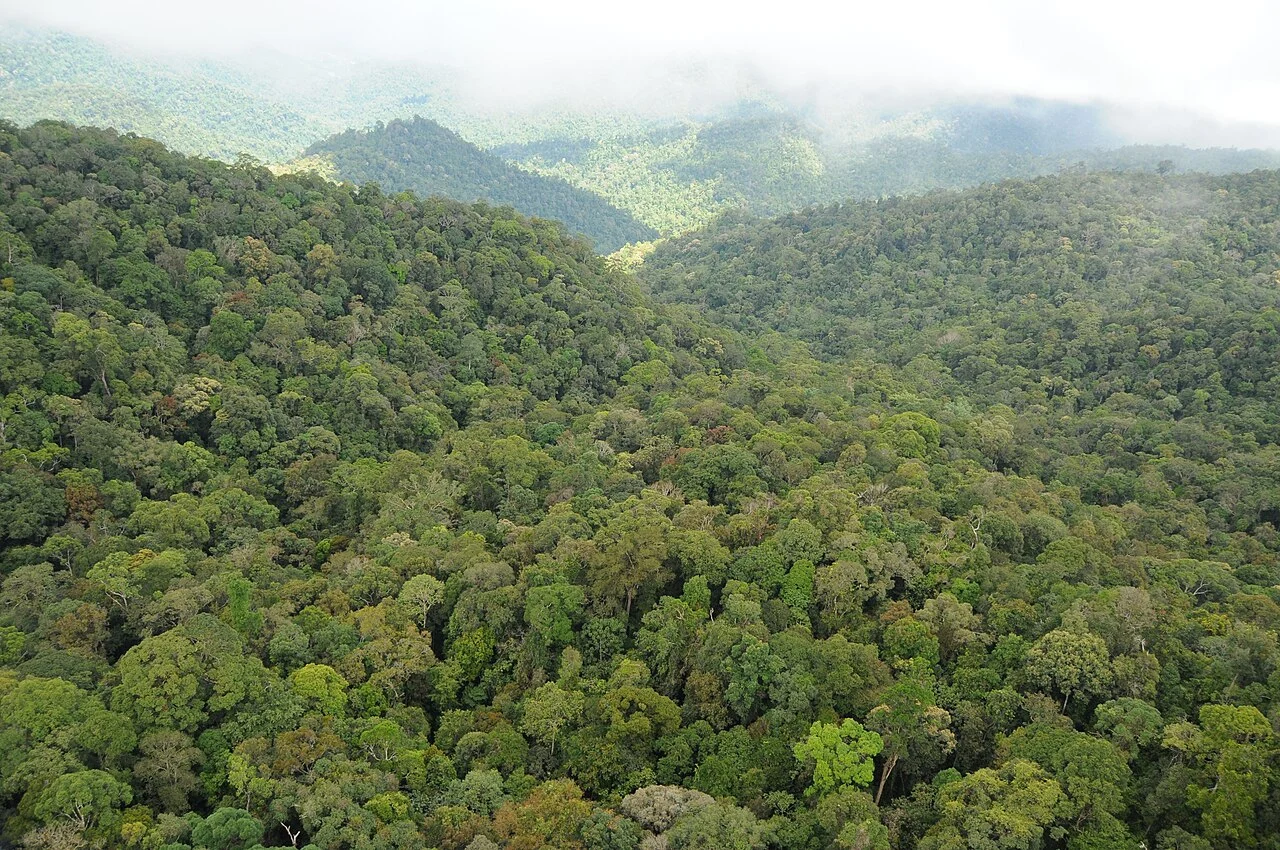
Summit Scrub and Soil Character
Above roughly 2,500 metres, short woody plants and several Rhododendron species form the upper mountain's scrub zone. Field studies classify Trus Madi's summit soils as non-ultramafic, a substrate distinction that shapes species composition and informs how botanical findings from this summit relate to those documented on other high Bornean peaks.
Nepenthes × trusmadiensis
The mountain lends its name to a naturally occurring pitcher-plant hybrid, Nepenthes × trusmadiensis, documented as a cross between N. macrophylla and N. lowii. Both parent species occupy the same narrow altitudinal band within the summit scrub, and the small extent of that shared habitat concentrates the hybrid's entire presence onto a correspondingly limited patch of ground.
The 2009 Forestry Survey
In 2009, the Sabah Forestry Department conducted a dedicated survey on the southern face of the Trus Madi summit, targeting Nepenthes × trusmadiensis to assess its presence and condition. This work formed part of a conservation framework for the Nuluhon Trus Madi forest area, in which the small summit habitat's botanical character informed the design of institutional monitoring.