
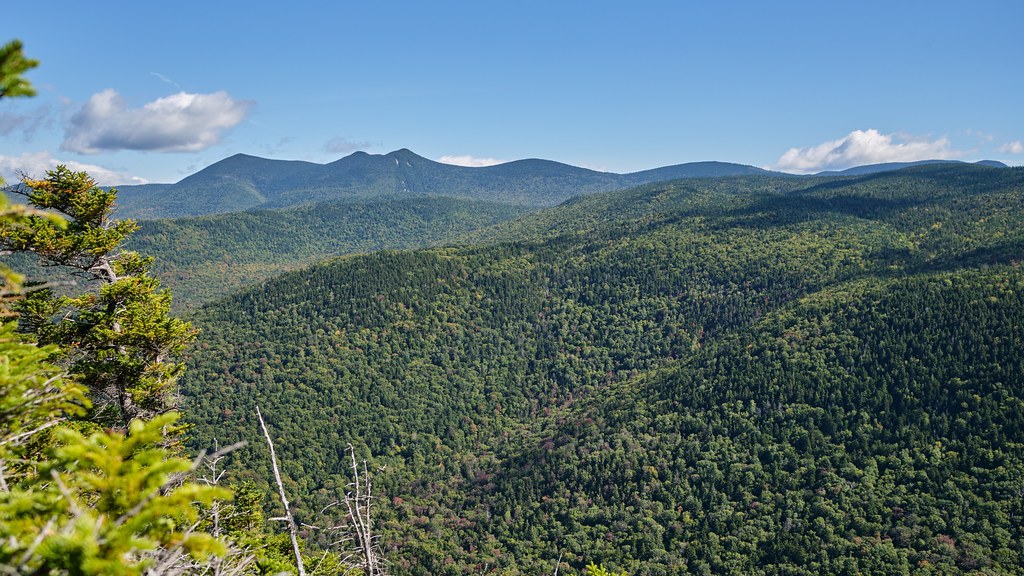
Three Crests and the AMC Four Thousand Footers List
The three named crests—north, middle, and south—give the mountain its distinctive profile and its name. The Appalachian Mountain Club lists North Peak and Middle Peak separately on its White Mountain Four Thousand Footers roster. North Peak, at about 1,274 meters, is the highest of the three. South Peak does not appear on the AMC list as an independent entry under the roster's separation criteria.
Storm-Triggered Slide Scars
A.L. Goodrich documents two storm-driven erosion events that shaped the visible face of Mount Tripyramid. A 1869 storm opened the South Slide on the mountain's flank. A second storm in 1885 produced the North Slide and enlarged the southern slide area, leaving exposed rock scars that reflect those particular events. Other rock exposures on the mountain may trace to different times and causes.
A. L. Goodrich's 1904 historical account of the Waterville Valley documented the slides as notable events, linking specific storm years to changes in the landscape that were visible to valley residents and entering them into local historical memory.
Cretaceous Intrusive Rock
USGS Geolex records a potassium-argon hornblende age estimate of approximately 112 million years for the intrusive rocks of Mount Tripyramid. The hornblende minerals locked within the cooled magma made that radiometric measurement possible. The landslides of the nineteenth century later stripped away overlying material, exposing broad patches of that ancient rock at the surface.