
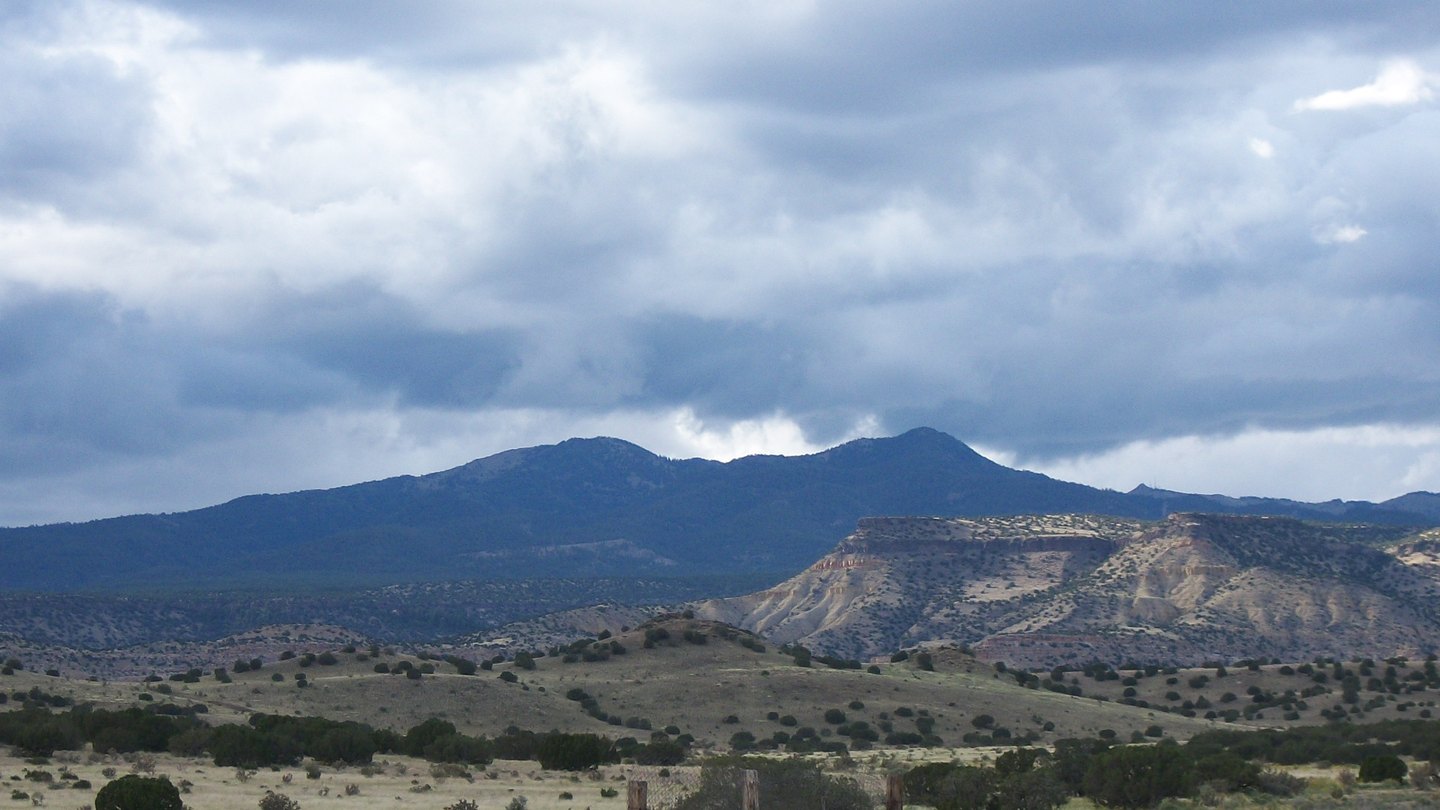
Volcanic Architecture
The main stratovolcano forms the central feature of a larger volcanic field that includes the Mesa Chivato plateau. Its construction from multiple eruptive materials produced the broad, complex profile visible in its eroded flanks today. Exposed dikes cutting through older deposits reveal the internal structure of the former volcanic system; no evidence supports a recent or historically documented eruption.
Tsoodził, the Southern Sacred Mountain
Navajo Nation publications identify Mount Taylor as Tsoodził, the southern of the four mountains that mark the directions of Diné Bikéyah, the traditional Navajo homeland. These four directional mountains are distinct within Navajo geography from the broader body of sacred peaks, serving as homeland boundary markers in Navajo oral tradition and governance documents.
Traditional Cultural Property
The U.S. Forest Service recognizes Mount Taylor as a Traditional Cultural Property, a designation reflecting the mountain's significance to multiple tribal nations and pueblos in the region. This cultural landscape classification acknowledges the mountain's continuing importance to Indigenous communities whose relationships with the peak long predate Euro-American settlement.