
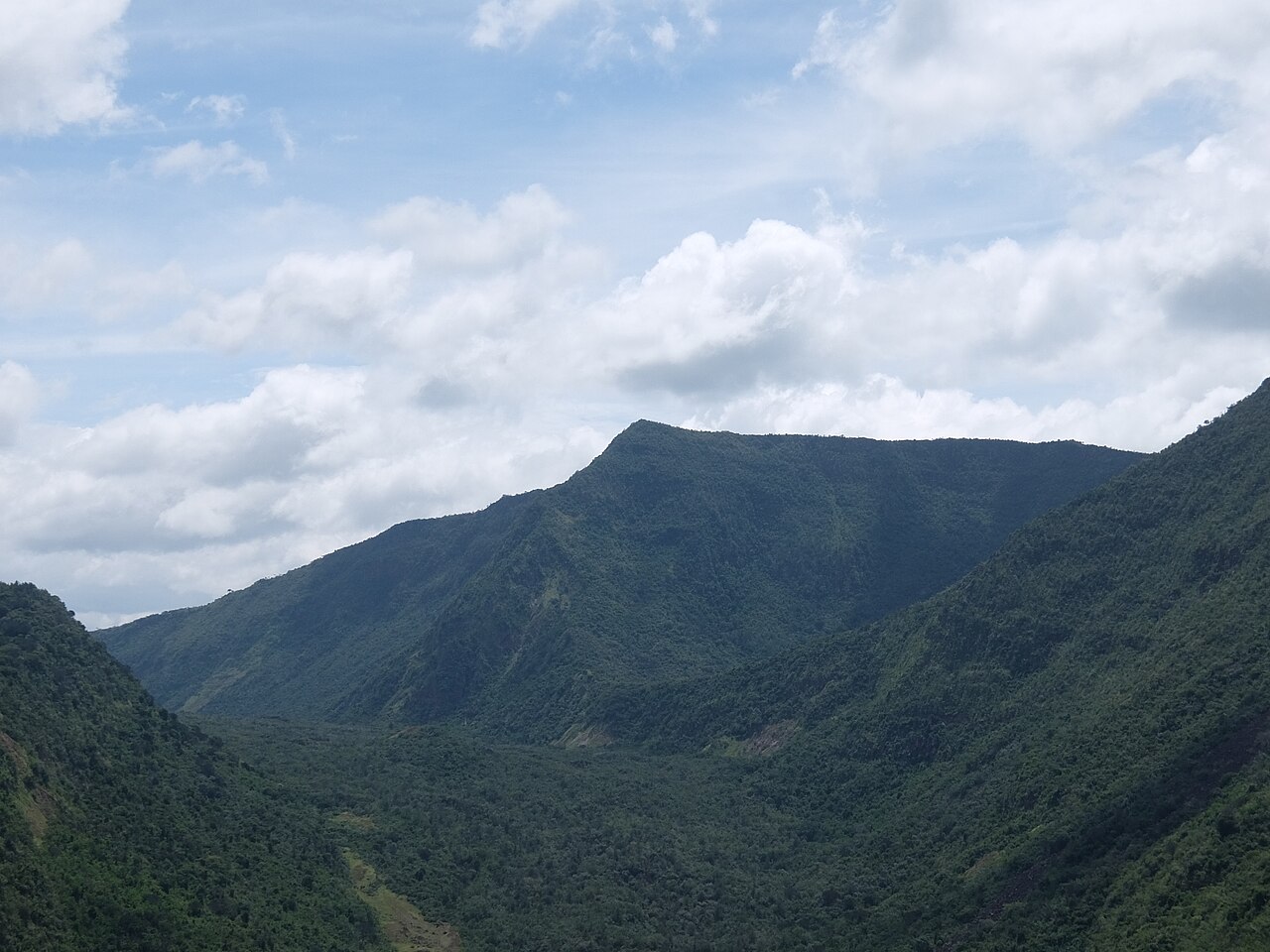
Shield, Caldera, and Inner Graben
The Smithsonian Global Volcanism Program describes Suswa's formation as beginning with an early shield volcano, the broad low-angle structure produced when fluid lavas accumulate over successive episodes. That foundation was later modified by eruptions of pumice and lava that accompanied the development of an outer caldera measuring approximately 8 by 12 kilometres. The sequence establishes Suswa as the product of constructive and destructive processes operating across distinct episodes rather than a single volcanic event.
Within the outer caldera, a younger ring graben approximately 5 kilometres wide formed by subsidence rather than explosion. This graben isolates a tilted block of earlier caldera floor that remained standing as the ground around it dropped. The block is continuous lava surrounded by the collapsed depression, giving the mountain's interior a structure with no close parallel elsewhere in the Kenyan Rift. The two depressions are not the same age and do not constitute a single feature.
Ol Doinyo Onyoke and the Southern Flank
On the south side of Suswa, a later lava cone known in Maa as Ol Doinyo Onyoke rises from the flank of the older structure. This cone postdates the main caldera-forming episodes and adds a subsidiary landform to an already compound volcanic edifice. The Maa naming — the language of the Maasai — reflects the long association between this landscape and the pastoralist communities whose movement has been shaped by the mountain's terrain.
Lava Caves and Community Conservation
Kenya's national tourism documentation identifies lava caves as a feature of the Suswa area, formed as lava tubes cooled and drained during past eruptive activity. The caves are described within a broader community conservation framework in which local communities manage access to the mountain and its surroundings. This arrangement distinguishes Suswa from purely state-administered parks and places geological heritage within a landscape where community land tenure is part of the research and visitor context.