
Terrain and Setting
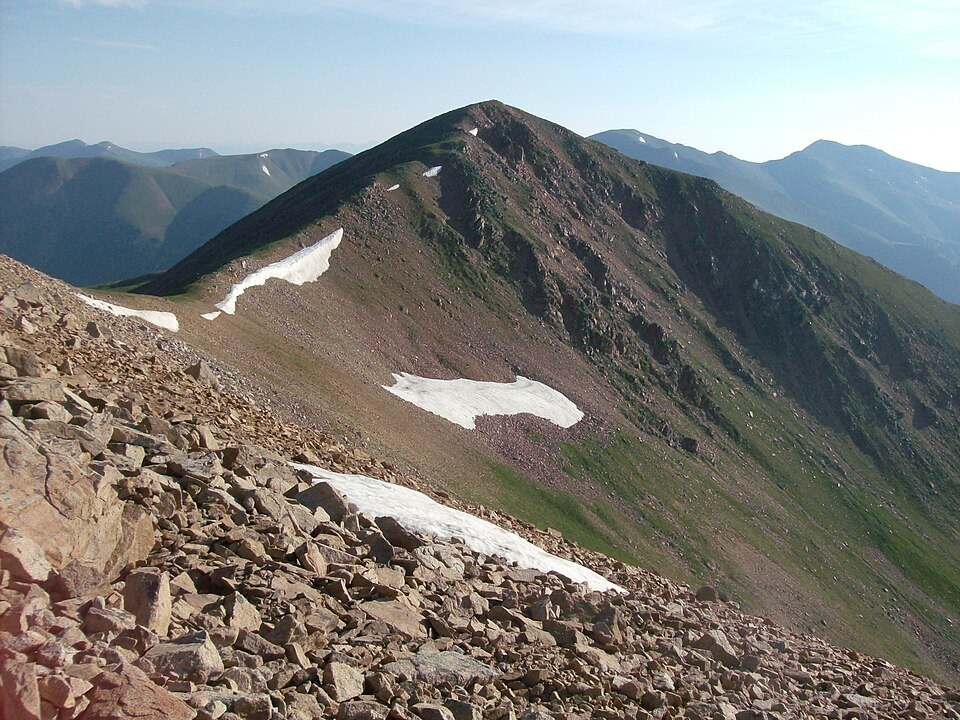
The summit sits along a crest in the Front Range section flanking Loveland Basin. Persistent freeze-thaw cycles at this elevation fracture bedrock and leave rock faces angular and exposed, the periglacial weathering characteristic of the central Colorado high country where thin soils and intense cold prevail.
The Name and Its Origin
The United States Board on Geographic Names adopted the name Mount Sniktau in 1926, connecting it to a pen name used by Edwin Hamilton Norton Patterson, a journalist based in Georgetown, Colorado, who wrote about the region's mining activity. Clear Creek County records include the federal decision card and a discussion of a similar pseudonym, Sniktaw, attributed to William F. Watkins spelling his surname backward. Whether that California pen name and Patterson's choice share a common origin or connection remains unconfirmed.
The 1976 Olympic Proposal
When the International Olympic Committee awarded the 1976 Winter Games to Denver in 1970, early planning designated Mount Sniktau and the Loveland Basin area as sites for alpine competition. By 1972, organizers had shifted those events to Vail. Colorado voters subsequently rejected government funding for the Games, Denver gave up its hosting rights, and the IOC relocated the Winter Olympics to Innsbruck.