
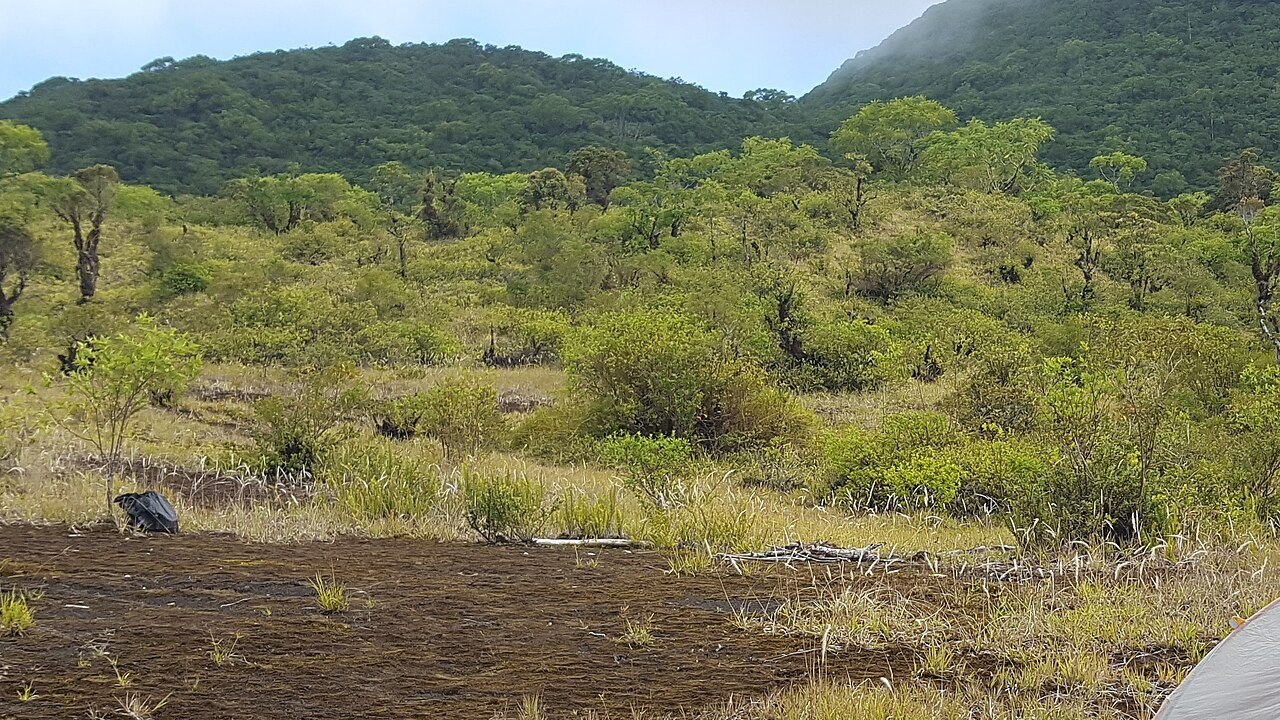
Summit of a Broad Shield
Savaiʻi as a whole is classified by the Smithsonian Global Volcanism Program as a shield volcano, a form characterized by gentle slopes built from repeated fluid lava eruptions over an extended geological period. Mount Silisili is the highest named peak on this structure, but it is important to distinguish the individual summit from the volcanic center that the Smithsonian marker represents — the latter stands for the entire island-scale system, not for Silisili specifically. The GeoNames-recorded summit position identifies the particular high point within that broader edifice.
A Chain of Cones Along the Rift
The upper portion of the Savaiʻi shield is not a single smooth dome but carries a chain of cones distributed along its summit zone and rift areas. This alignment of cones reflects the structural controls on volcanism common to shield systems, where magma repeatedly finds pathways along predictable rift orientations. The presence of multiple cones along the summit region gives the high terrain of Savaiʻi a more complex topographic character than a simple peak, with Silisili marking the elevation maximum within this broader volcanic landscape.
The Matavanu Eruption as Geological Context
From 1905 to 1911 eruptions at the Matavanu vent produced lava on the Savaiʻi shield. Matavanu is a separate vent from the summit of Silisili. Its record shows how eruptive activity can shift across the same broad volcanic island.