
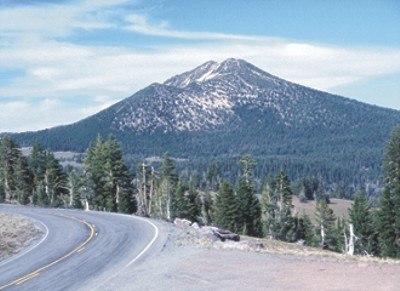
A Volcanic Remnant Older Than the Caldera
The National Park Service dates the Mount Scott volcanic remnant to approximately 425,000 years ago. The climactic collapse of Mount Mazama, which created the Crater Lake caldera, occurred around 7,700 years ago — a separate geological event. Mount Scott thus existed as a landscape feature long before Mazama's collapse reorganized the surrounding terrain.
Position East of the Lake and the Caldera Rim
Scott rises east of the lake, outside the caldera rim proper. Hillman Peak holds the distinction of highest point on the rim itself; Scott stands apart as an older remnant unrelated to Mazama's original structure. This eastern position yields a vantage encompassing both the lake and the broader volcanic plateau beyond.
Upper-Slope Ecology and the Fire Lookout
Whitebark pines grow on Scott's high slopes, a species characteristic of subalpine elevations across the Pacific ranges. A historic fire lookout occupies the summit, reflecting the era when high western positions served early wildfire detection across the region.