
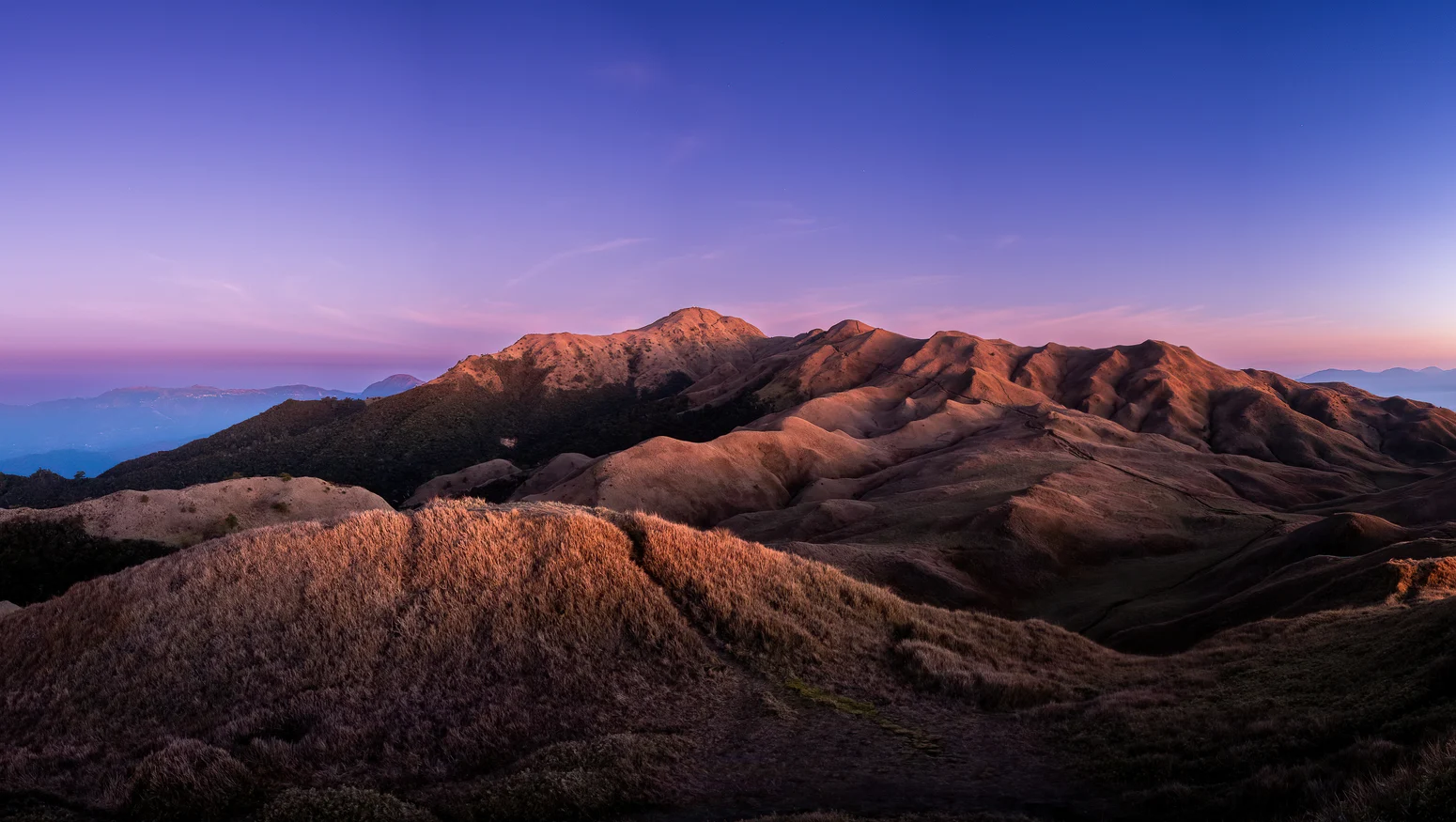
Summit Terrain and Landscape Character
The defining quality of Pulag's upper elevations is the transition from dense, steep-sided forest to expansive summit grassland—a mosaic that includes stands of dwarf bamboo across the high plateau. This open terrain, perched above the cloud layer on clear mornings, produces the conditions that Benguet provincial tourism describes as cloud-sea views, where low cloud fills the valleys below while the summit remains exposed. The abrupt vertical relief created by the mountain's steep flanks intensifies this effect, compressing ecological zones within a relatively short ascent.
The grassland and mossy forest zones together sustain the biodiversity that underpins the site's formal protections. The DENR general management plan identifies the protected area as home to multiple distinct ecosystems, a characteristic that informed the scope of the legislation that would follow.
Indigenous Peoples and Sacred Significance
For the Kalanguya and Ibaloi communities whose ancestral territories fall within the protected area, Mount Pulag carries meaning that extends beyond its physical dimensions. Benguet provincial tourism explicitly identifies the mountain as sacred to the Indigenous peoples of Benguet and Ifugao, linking it to ancestral beliefs that remain active rather than historical. The DENR general management plan names the Kalanguya and Ibaloi as distinct communities within the protected landscape; they represent different peoples with their own cultural frameworks and should not be treated as a single group.
The relationship between these communities and the mountain predates any formal designation. The significance of that relationship is acknowledged in the goals of Republic Act No. 11685, which lists the protection of Indigenous practices among its stated aims alongside ecosystem conservation.
Legal Designation and Protected Status
Republic Act No. 11685, enacted in 2022, established the Mount Pulag Protected Landscape as a formal legal category spanning portions of Benguet, Ifugao, and Nueva Vizcaya. The law sets out protection of both the mountain's ecosystems and the Indigenous practices of communities within its boundaries as explicit goals. Mount Pulag National Park also appears on the UNESCO World Heritage Centre's Tentative List, submitted on 16 May 2006.
The three-province extent of the protected landscape reflects the mountain's physical reach across a significant section of the northern Cordillera. Administering a site whose boundaries cross multiple provincial jurisdictions, while also engaging with the distinct governance structures of Indigenous communities, defines the management challenge that the DENR general management plan was designed to address.