
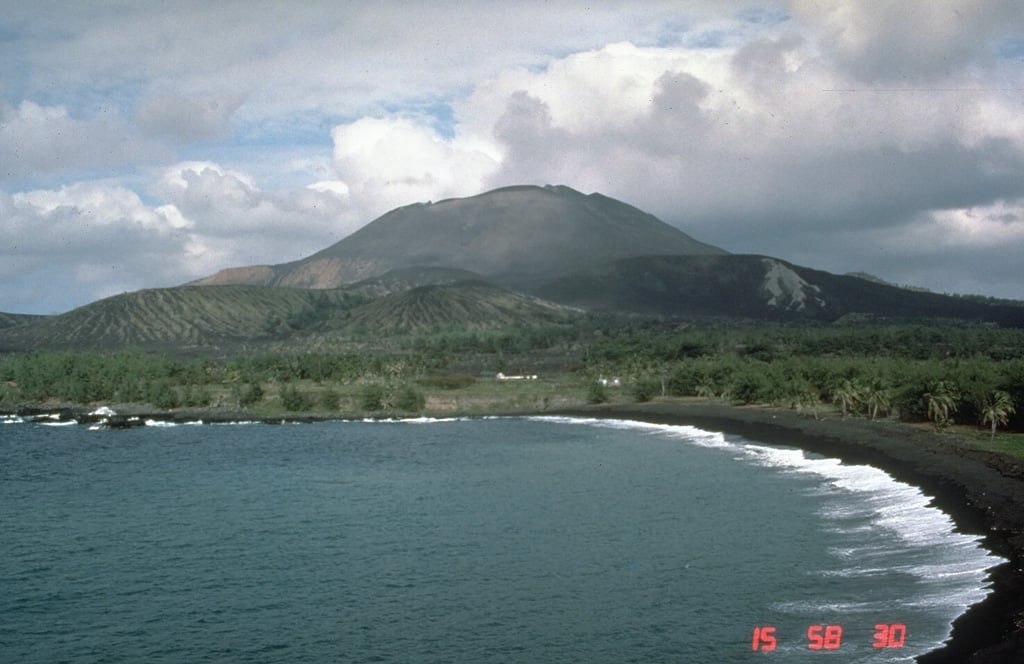
Two Volcanoes, One Island
The U.S. Geological Survey describes Pagan Island as two stratovolcanoes linked by a narrow isthmus, a configuration that sets it apart from other Mariana islands. The southern cone has several craters of its own, making it a structurally distinct edifice rather than a minor appendage of the northern summit.
A Cone Within a Caldera
Mount Pagan grew inside a broad older caldera, so the walls of an earlier collapse structure partially encircle the base of the younger cone. This nested arrangement indicates the site has sustained volcanic activity across more than one cycle of construction and collapse, with the 570-meter summit representing the most recent phase.
The 1981 Eruption
The 1981 eruption was the largest in Pagan's historical record and prompted evacuation of the island's residents. The Smithsonian Global Volcanism Program attributes most historically recorded eruptions at Pagan to the northern cone, establishing Mount Pagan as the more persistently active of the two volcanoes across the documented period.