
Summit and Massif
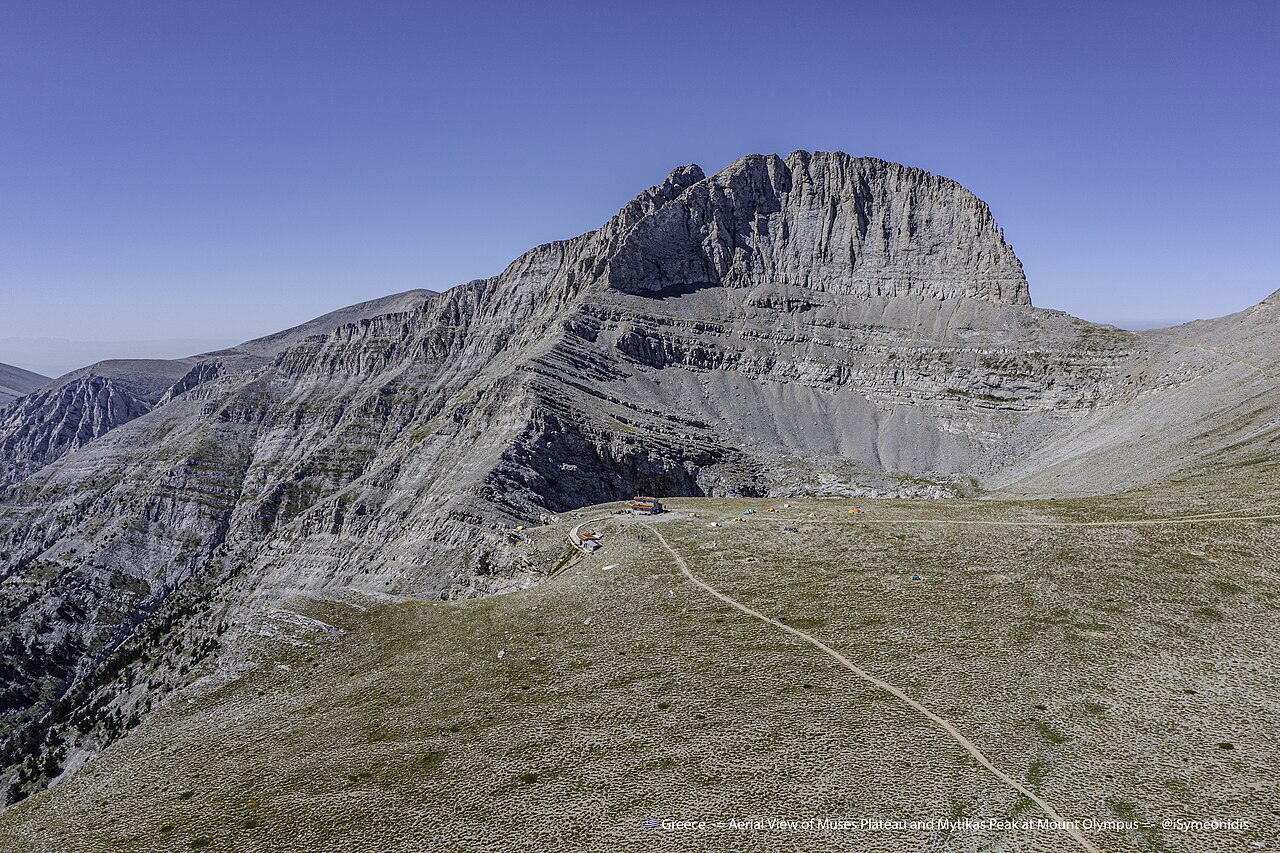
The Greek National Tourism Organisation records Mytikas, the highest of Olympus's multiple summits, at 2,917 metres. The neighbouring peak of Stefani reaches 2,909 metres. A UNESCO biosphere overview gives a figure of 2,914 metres for the summit. The massif is composed predominantly of limestone and rises from low foothills through steep upper slopes across distinct altitudinal bands, with Mediterranean scrubland giving way to mixed forest, open grassland, and bare summit rock.
Mythology
Ancient Greek tradition located the dwelling of the twelve Olympian gods on Mount Olympus. The peak of Stefani carries the specific association of Zeus's throne within that tradition.
First Ascent
The first documented ascent of Mytikas took place on 2 August 1913, when Greek guide Christos Kakalos reached the summit alongside Swiss photographer Frédéric Boissonnas and writer Daniel Baud-Bovy. Boissonnas and Baud-Bovy produced a photographic and written record of the climb, and 2 August 1913 is the fixed reference point for the recorded climbing history of the peak.
Protected Status
The Olympus massif became Greece's first designated national forest park in 1938, a status managed today through the National Environment and Climate Change Agency. UNESCO subsequently designated the area a biosphere reserve, a separate category with its own criteria distinct from the 1938 national designation.