
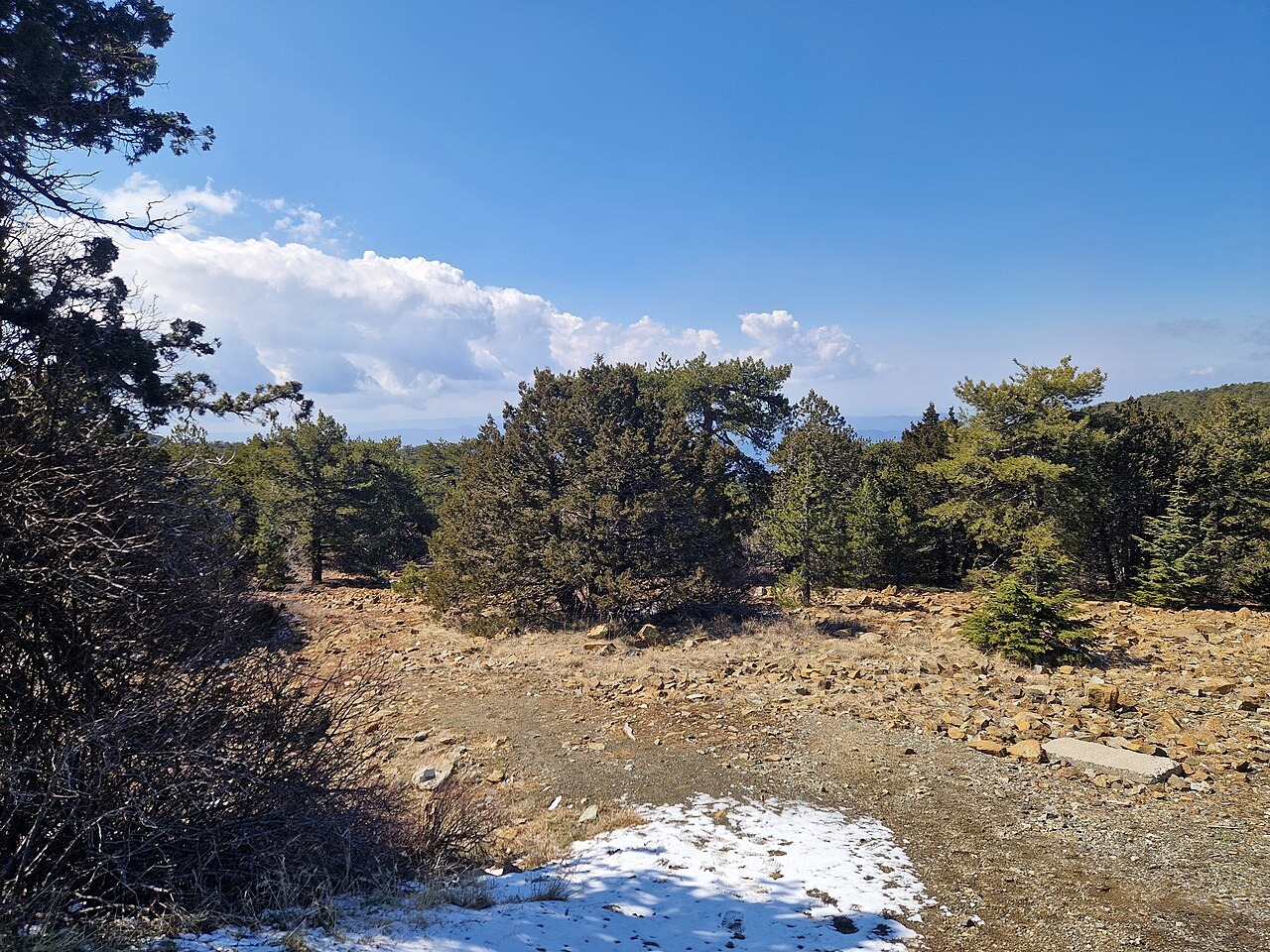
Ocean Crust and Chromite Workings
An ophiolite is a section of oceanic crust and upper mantle displaced onto island terrain. The Troodos ophiolite preserves a rare and unusually complete sequence of these materials, with well-exposed rocks from the lower ocean crust and upper mantle concentrated around Olympus, dating to approximately 90 million years ago. Within the dunite rocks encircling the summit, the Geological Survey Department records abandoned chromite shafts, reflecting a mining history tied directly to this ultramafic geology.
Venetian Remains
Tourism authority records document ruins of makeshift fortifications known in Greek as "teishia tis palaias choras," attributed to the final years of Venetian control of Cyprus, which ended in 1571. Mount Olympus lies within the Troodos UNESCO Global Geopark, a designation recognising the scientific significance of the ophiolite landscape.
The Artemis Trail
The Artemis trail circuits the summit at approximately 1,850 metres through Troodos National Forest Park, passing through black pine forest. The Cyprus Tourism Authority describes two individual trees along the route as approximately 500 years old. Among the endemic plants documented here is Salvia willeana, the Troodos sage, a species confined to this mountain range.