
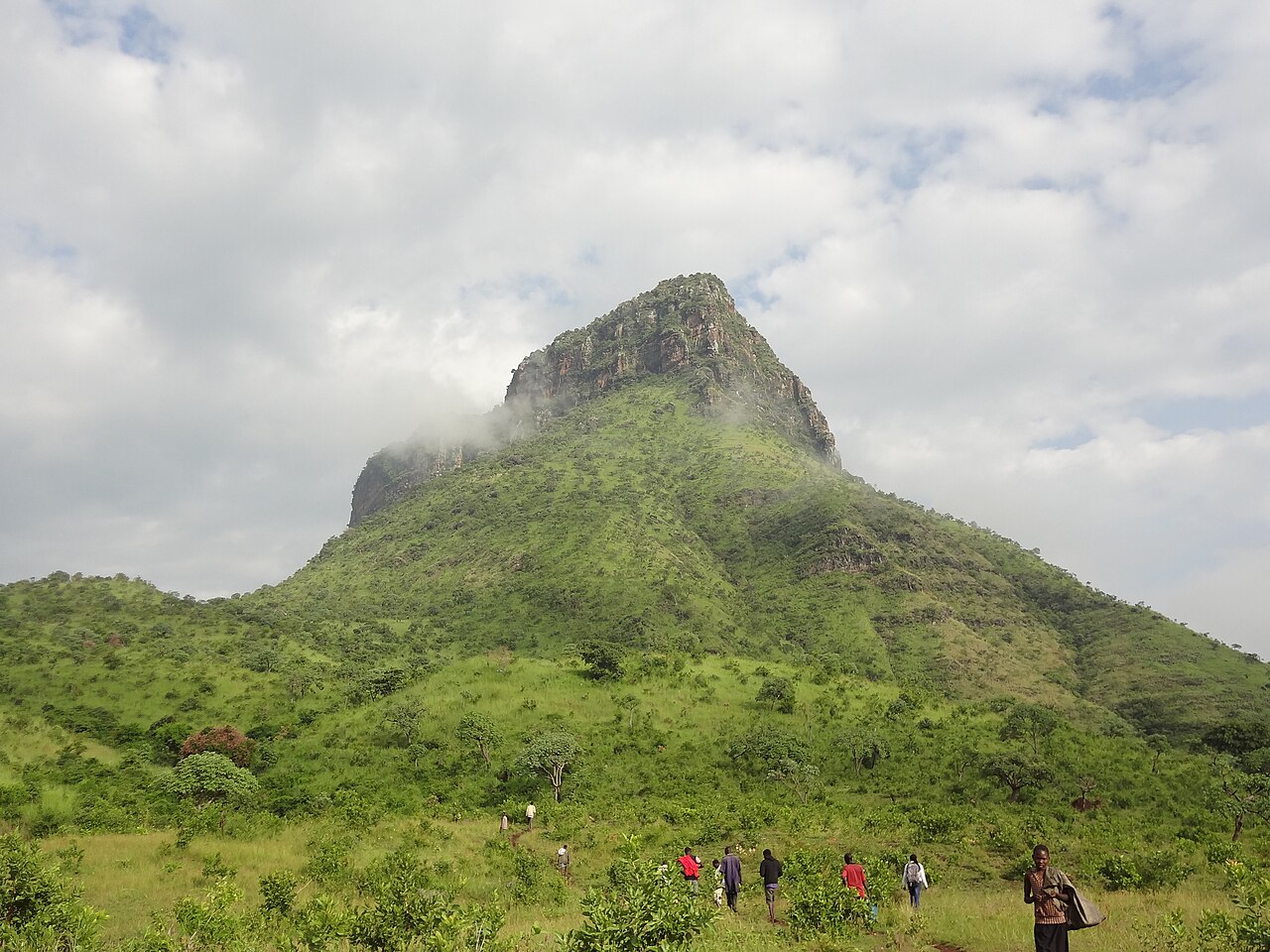
Volcanic Structure and Miocene Age
The mountain formed through carbonatite-nephelinite volcanism during the Early Miocene epoch, dated by the IUGS to approximately 20.5–19 million years ago. Long-term erosion has removed large portions of the original cone, leaving the central plug and associated flank rocks standing above the surrounding plains. The subsidiary feature known as Akisim forms part of the same Napak edifice.
Fossil Ash Beds and Primate Record
Volcanic ash beds and paleosols within the eroded flanks contain the remains of roughly 15 primate taxa alongside other vertebrates and plant material. Among the recorded species is the large hominoid Ugandapithecus major. Researchers working from these assemblages have reconstructed the Miocene environment at Napak as woodland with open areas, consistent with the range of fauna and flora recovered from the deposits.
Field Research History and Heritage Designation
Systematic collecting at Napak began between 1958 and 1964, establishing the site's scientific importance. A Franco-Ugandan field collaboration resumed in 1985 and has continued to build the documented fossil record, with the Uganda National Museums and the University of Michigan among the institutions contributing to research. In 2022 the IUGS designated Napak a geological heritage site in recognition of its volcanic geology and palaeontological significance.