
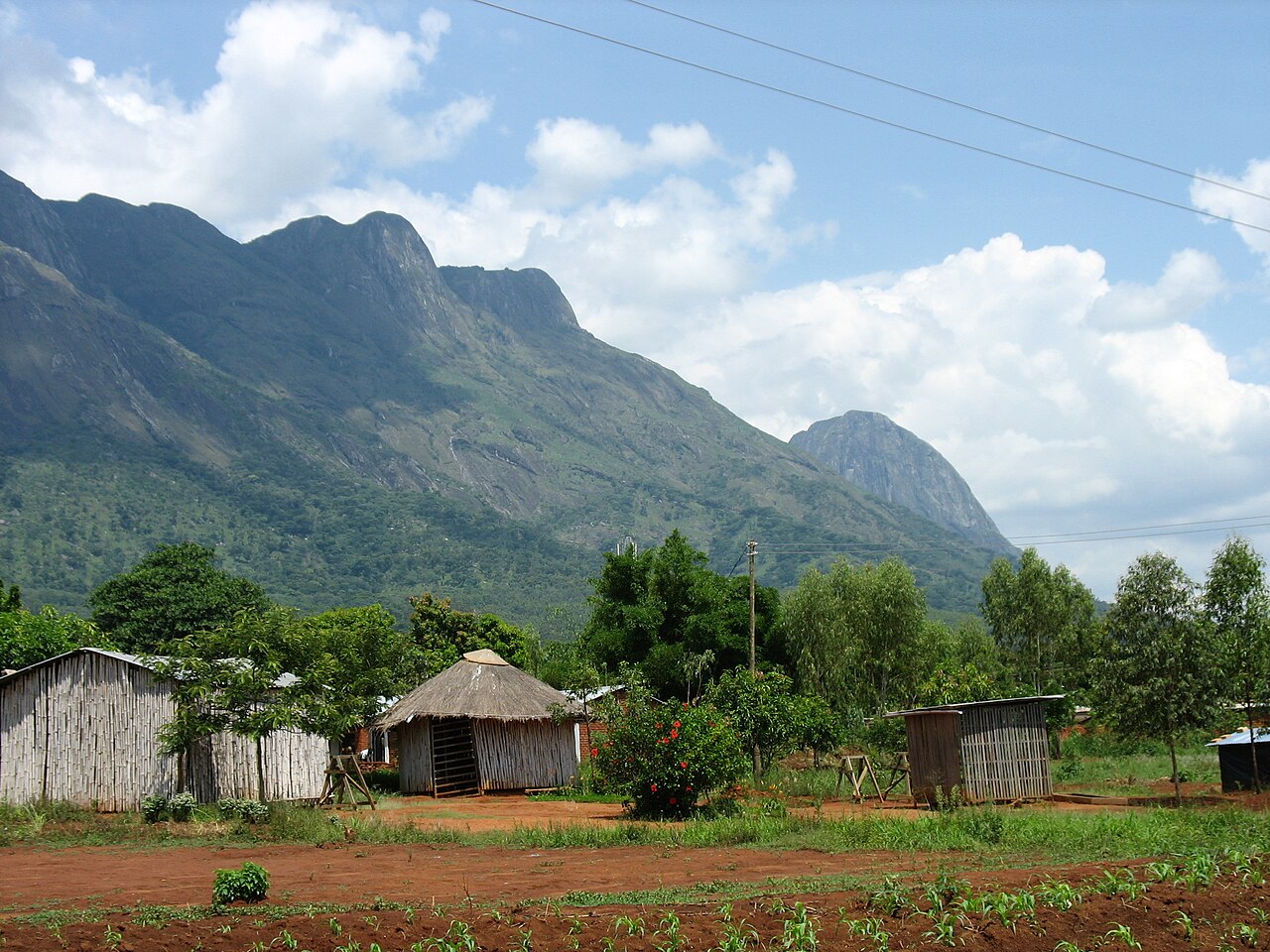
Geology and Landform
The geological foundation of Mount Mulanje is a syenitic intrusion — a body of coarse-grained igneous rock that now stands exposed as the surrounding plains eroded away. The massif comprises a complex of summits and plateaux edged by precipitous rock faces. Sapitwa, at 3,002 metres per the UNESCO Man and the Biosphere Programme, is Malawi's highest summit. The south- and east-facing slopes are cut by rainforest gorges supporting dense canopy vegetation. The northern and western flanks carry drier Brachystegia woodland, the broad-leaved savanna forest widespread across the African plateau.
The Mulanje Cedar and Its Forests
Above the lower slopes, Mount Mulanje sustains high cloud forest whose characteristic tree is Widdringtonia whytei, the Mulanje cedar and Malawi's national tree. The species is critically endangered. UNESCO's Man and the Biosphere Programme documents that illegal and unsustainable harvesting has reduced the cedar's forest cover.
Cultural Custodianship and Sacred Landscape
The Yao, Mang'anja, and Lhomwe communities hold distinct traditions of custodianship over the Mount Mulanje landscape. Specific landforms, water sources, rock faces, and gorges carry associations with ancestors and spiritual practice within these traditions. In 2025, the UNESCO World Heritage Committee inscribed a wider cultural landscape encompassing the massif, with the cultural traditions of these three peoples as the basis for inscription.