
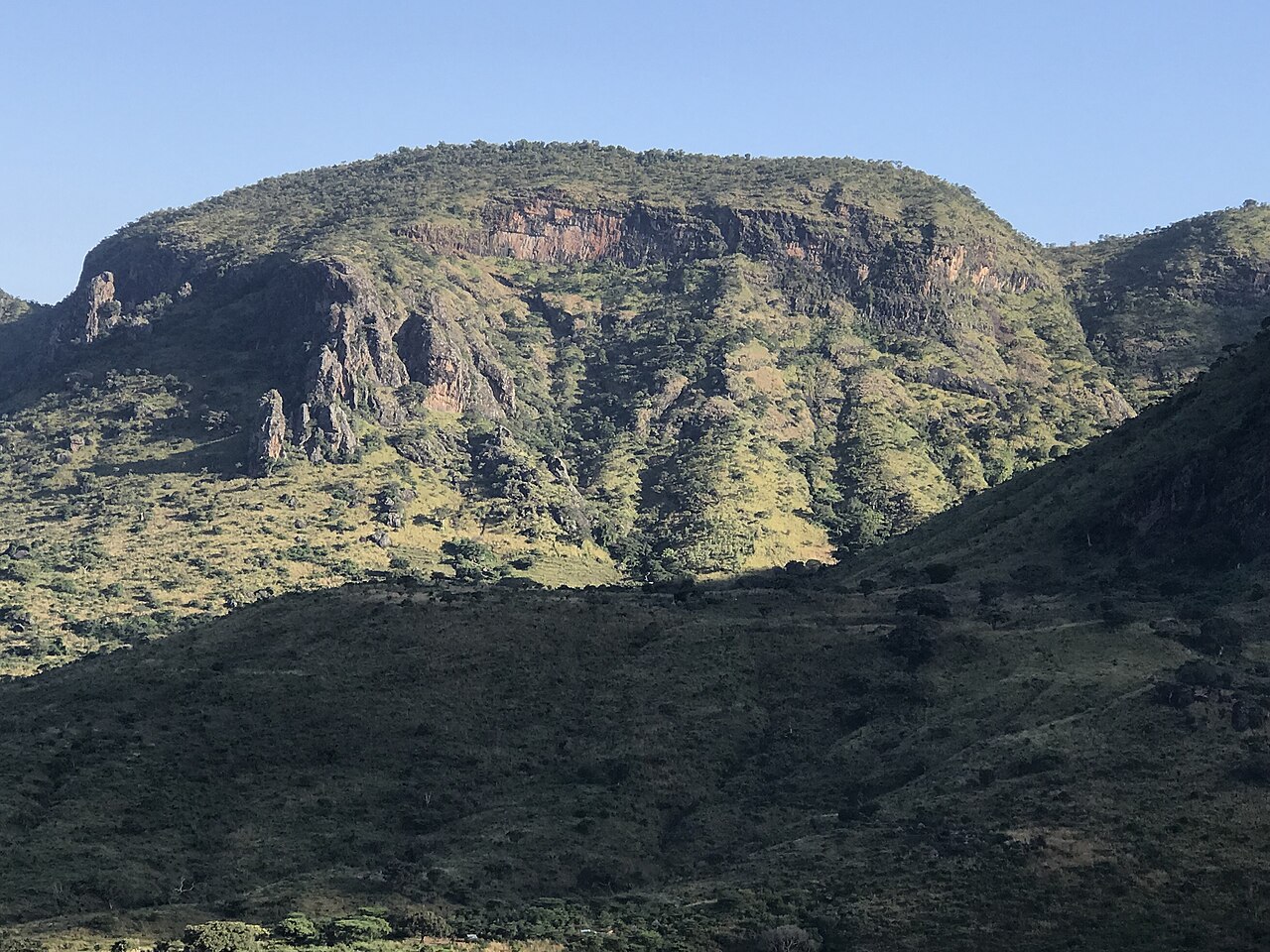
Moroto II and the Morotopithecus Fossil Beds
The Moroto II site on the mountain's flanks contains sediments dated to approximately 21 million years ago. Fossils recovered there include remains of Morotopithecus bishopi, an early hominoid whose bones and teeth have been the subject of continuing anatomical study. A 2023 paper in Science reported that analysis of the specimens suggests varied locomotion and feeding on water-stressed leaves, contributing to debate about the origins of upright posture in apes.
Miocene Habitat Recorded in the Palaeosols
Plant fossils and palaeosol chemistry at Moroto II indicate a seasonally dry woodland environment during the early Miocene. C4 grasses are recorded at the site alongside evidence of periodic moisture stress in the vegetation. These local conditions, documented through sediment analysis, provide a detailed picture of the habitat in which Morotopithecus lived rather than a generalized account of the broader region.
Regional Collections at Moroto Museum
Uganda National Museums operates the Moroto Regional Museum in the town below the mountain, holding collections that contextualise the fossil discoveries within the broader natural and cultural history of Karamoja. The museum serves as the primary public institution connecting the mountain's scientific significance to the surrounding community and to researchers visiting the area.