
Naming and Early Documentation
USGS records attribute the name to Ernest de Koven Leffingwell, an early twentieth-century explorer whose 1919 report described high, ice-covered peaks in this part of the Brooks Range. Leffingwell named the peak for Albert Abraham Michelson, the physicist who received the 1907 Nobel Prize in Physics for his work with precision optical instruments. The historical elevation of 2,816 meters that appears in some older sources derives from an estimate in that same 1919 volume, not from modern survey methods.
Survey Elevation and Summit Conditions
An aerial survey published in 2016 measured the summit at 2,698.1 meters, placing Michelson fourth among the five U.S. Arctic peaks measured in that campaign. Repeat aerial photographs from the same survey document summit snow overhangs several meters thick, a feature that complicates precise elevation determination. The nearby unofficially named Mount Okpilak differs from Michelson by only about three meters on the same survey datum, a margin narrow enough that the ranked order of such closely matched peaks could shift depending on measurement method or future survey conditions.
Setting and Refuge Context
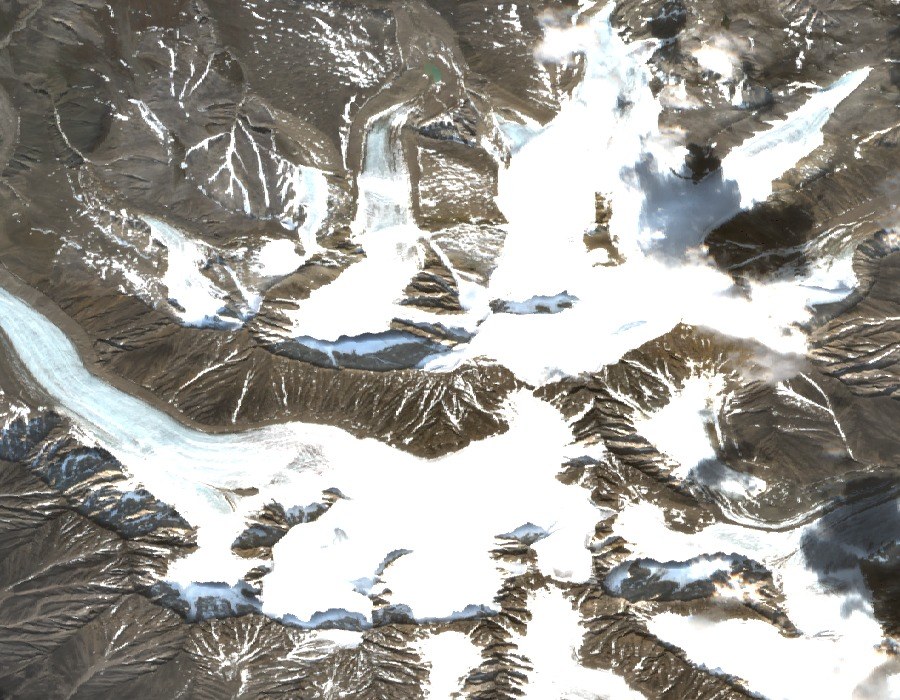
The mountain lies within the Arctic National Wildlife Refuge, administered by the U.S. Fish and Wildlife Service. It should not be confused with a separate official Mount Michelson in Alaska's Chugach Mountains near Meares Glacier — a distinction the USGS gazetteer records explicitly. Satellite imagery from 2026 shows the Romanzof peaks mantled in glacial ice, consistent with Leffingwell's early descriptions of the terrain between the Hulahula and Okpilak drainages.