
Four Volcanic Stages Dated by Pouclet et al. 2014
Pouclet et al. 2014 proposed four distinct stages in the construction of Manengouba. An early broad shield built the main edifice between 1.55 and 0.94 million years ago. The Eboga stratocone then grew from roughly 0.94 to 0.89 million years ago. Collapse of the Eboga edifice and extrusion of the Elengoum lavas and domes followed from approximately 0.89 to 0.70 million years ago. A final phase of intracaldera and flank activity occurred from about 450,000 to 110,000 years ago. The full volcanic history of Manengouba therefore spans all four stages, beginning more than 1.5 million years ago.
The Eboga Caldera and Its Two Named Lakes
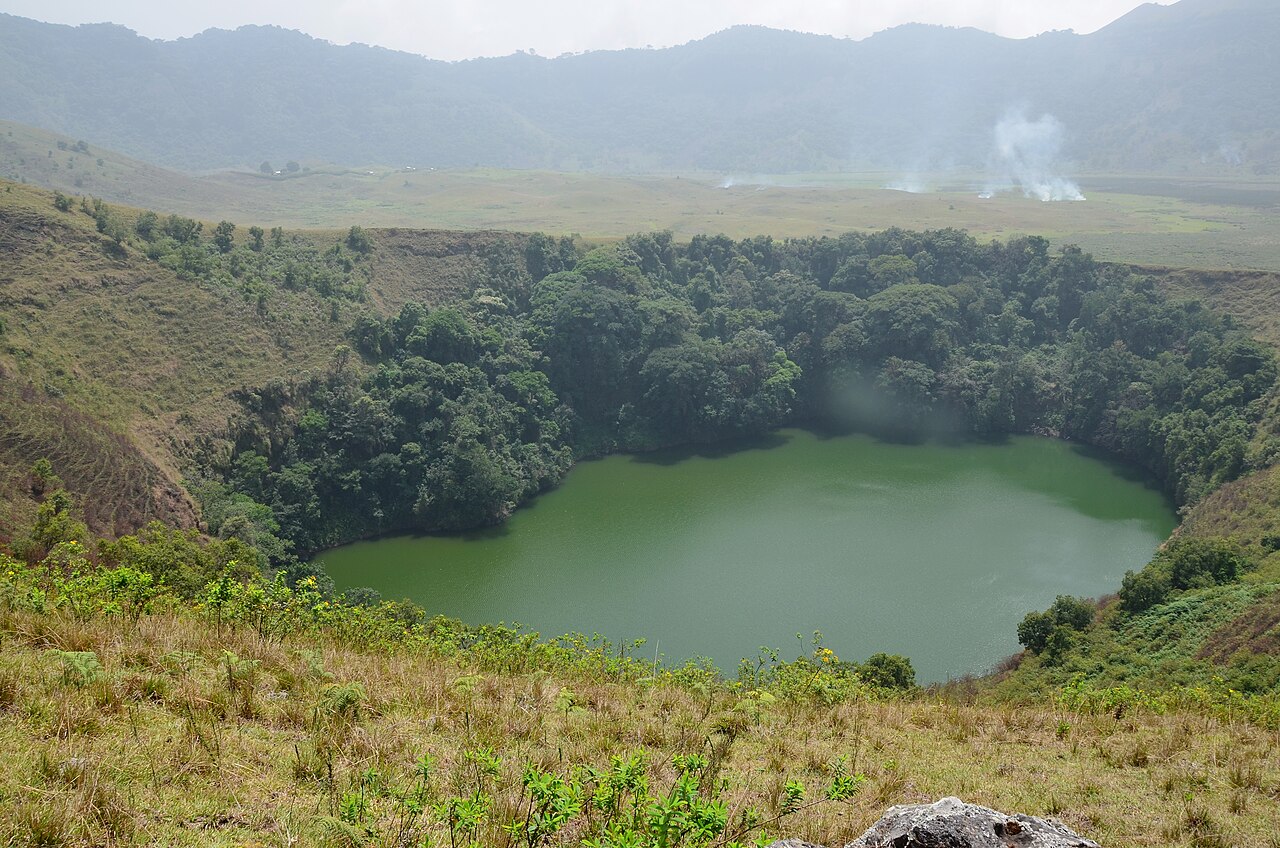
The Eboga caldera formed through collapse of the stratocone edifice. Within it sit two lakes documented under the names Male Lake and Female Lake. The Smithsonian Global Volcanism Program also notes smaller cones and maars distributed across the Manengouba complex, distinguishing these features from the collapse-formed caldera.
Bat Field Research at Manengouba and Bamboutos
Published field research surveyed bats at Manengouba and the nearby Bamboutos massif, sampling disturbed habitats at both sites across varied vegetation types. The results reflect the specific sampled locations and habitats encountered during fieldwork and do not constitute a complete faunal inventory for either mountain.