
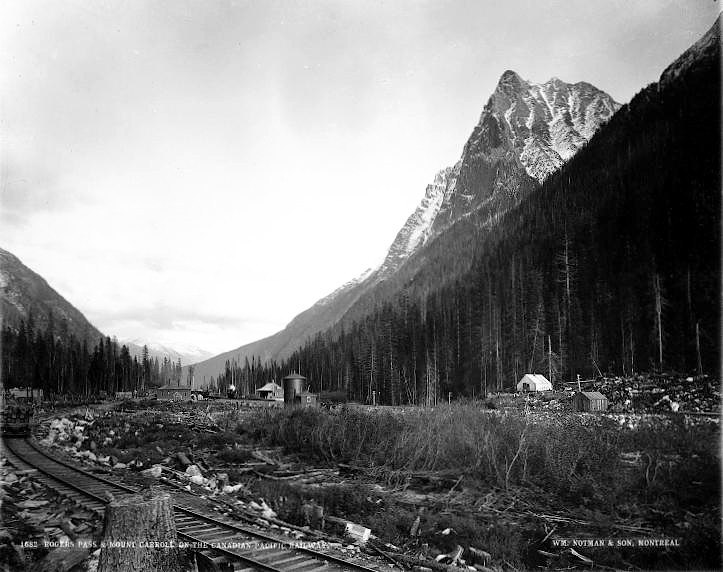
A Summit in a Narrow Corridor
Mount Macdonald reaches 2,883 metres in the Selkirk Mountains of British Columbia, within Glacier National Park just east of Rogers Pass. The pass is a compressed gap flanked by steep valley walls, and the mountain is one of several distinct peaks concentrated in this narrow section of the Selkirks.
The Avalanche Disaster of 1910
On 4 March 1910, workers clearing blocked railway tracks at Rogers Pass were struck by a second avalanche descending from Avalanche Mountain, killing 58 people. The disaster became a critical point in managing the mountain rail corridor.
Two Tunnels and a Changed Grade
Two railway tunnels address the same terrain from different eras. The 8-kilometre Connaught Tunnel, completed in 1916, reduced avalanche exposure by bypassing the open pass. The Mount Macdonald Tunnel, completed in 1988, bores beneath the mountain at a lower elevation, reducing the westbound grade for freight traffic.